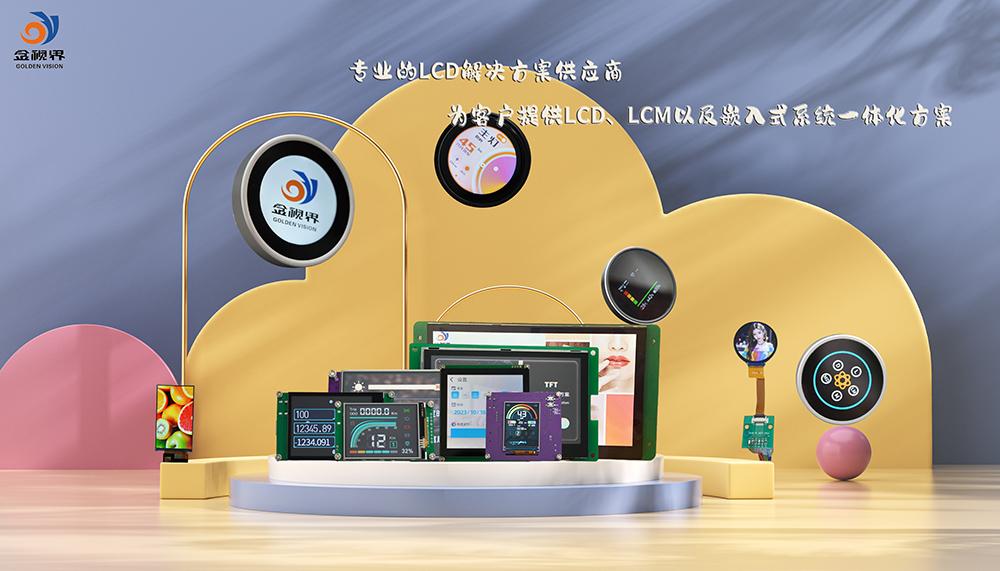
Custom LCD Display Solutions: From Monochrome Segment Displays to Modern Touch Screens
In today's fast-paced electronics landscape, the display is often the most visible interface between a product and its user. Whether you're designing a medical device, an industrial control panel lcd display, a smart home appliance, or an automotive instrument cluster, choosing the right display technology is critical to your product's success. Among the many options available, custom lcd displays offer the flexibility, reliability, and cost-efficiency that OEMs and integrators need.
The Power of Custom LCD Displays
Off-the-shelf displays rarely fit perfectly into a unique product design. A custom LCD display allows you to tailor every aspect — from shape, size, and glass thickness to viewing angle, voltage, and connector type. This level of customization ensures that the display integrates seamlessly into your enclosure, meets your power budget, and delivers optimal readability under real-world conditions.
Custom LCDs also enable branding differentiation. By designing a display that matches your product's aesthetic and functional requirements, you create a more cohesive user experience that stands out in a competitive market.
Monochrome Segment LCD Displays: Proven Reliability
For applications that require simple, clear numeric or alphanumeric readouts at a low cost, the monochrome segment LCD display remains the gold standard. These displays use predefined segment patterns (7-segment, 14-segment, or custom icons) to present information with high contrast and ultra-low power consumption.
Common applications include:
- Medical devices — blood pressure monitors, thermometers, glucose meters
- Industrial meters — pressure gauges, flow meters, timers
- Home appliances — microwave ovens, air conditioners, washing machines
- Automotive dashboards — speedometers, fuel gauges, odometers
Segment LCDs consume only microamps of current, making them ideal for battery-powered devices. Their simple construction also means they are highly resistant to extreme temperatures and have an exceptionally long lifespan.
Touch Screen Displays: Interactive Modern Interfaces
When your product demands intuitive user interaction, a touch screen display is the natural choice. Modern touch displays combine a high-resolution LCD panel with a touch sensor layer — typically resistive or capacitive — enabling users to interact directly with on-screen content.
Capacitive touch screens support multi-touch gestures such as tap, swipe, and pinch-to-zoom, making them perfect for consumer electronics, POS terminals, smart home hubs, and medical device touch screen displays. Resistive touch screens, on the other hand, can be operated with gloves or a stylus, which makes them popular in industrial and outdoor environments.
Custom touch screen displays can be designed with specific glass thickness, optical bonding (for reduced glare), anti-fingerprint coatings, and tailored touch controller firmware to match precise responsiveness requirements.
Choosing the Right Display for Your Application
| Parameter | Monochrome Segment LCD | Touch Screen Display |
|---|---|---|
| Best for | Simple numeric/icon readouts | Rich interactive GUI |
| Power consumption | Ultra-low (µA) | Moderate (mA) |
| Cost | Very low | Higher |
| User input | No (read-only) | Yes (touch interaction) |
| Environmental resistance | Excellent | Good (with optical bonding) |
| Customization | High (glass, segments, pins) | High (size, touch type, coating) |
For many products, a hybrid approach works best: a segment LCD for always-on status information plus a touch screen for advanced settings and controls. A trusted custom LCD display manufacturer can help you evaluate trade-offs and design a solution that fits your exact requirements.
Conclusion
From the simplicity and reliability of monochrome segment LCD displays to the rich interactivity of touch screen displays, the right custom display solution can elevate your product's performance and user experience. When you work with an experienced manufacturer who offers full customization — glass design, IC selection, backlight options, and touch integration — you ensure that your product delivers exactly what your customers expect.
At GVLCD, we specialize in custom LCD display design and manufacturing, serving clients across medical, industrial, automotive, and consumer electronics markets. Whether you need a cost-effective segment LCD or a full-color touch screen, we're here to help bring your vision to life.