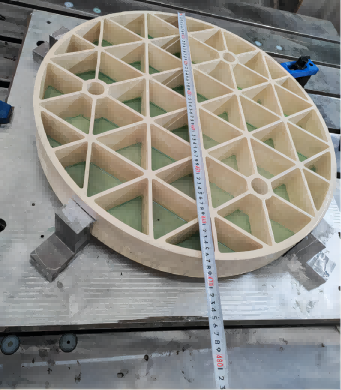
If the optical telescope is compared to human "clairvoyance", then the main mirror in the optical telescope can be called the "cornea". The larger the diameter of the main mirror, the higher the spatial resolution of the optical telescope. Generally speaking, it means you will see more clearly. 


Large size optical mirrors are core components of high-resolution space Earth observation, deep space exploration and astronomical observation systems. Its manufacturing technology level is an important indicator of a country's development level of high-performance optical systems.

Betensh Optics focus on providing customers with all kinds of customized lightweight optical parts.


Type: Flat surface, Spherical, Aspherical, Cylindrical, Special shaped,etc

Material: Optical glass, Fused silica, Zerodur, SiC,etc

Diameter: 100 to 1500mm

Surface Figure: λ/10@632.8 nm/500mm


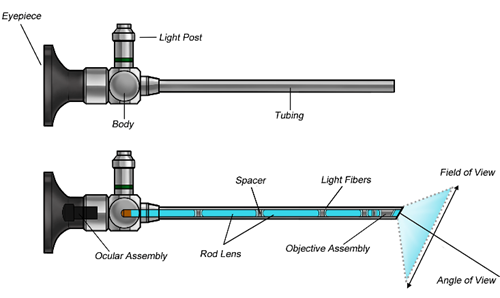
When the ends of rod lenses are polished they may be used as circular lenses, and will have the same optical properties as a long circular lens with a narrow diameter. These lenses have an important application in rigid endoscopes, medical instruments used to view inside the human body. 


Betensh Rod Lens Capacity


Material: Optical Glass, Sapphire

Diameter: 0.5+mm

Diameter Tolerance: 0.015 mm

Thickness Tolerance: ±0.01 mm

S/D: Better than 40-20

Flatness PV/WFE: λ/5

Centration: 4’

Coating: AR/Black chromed


Contact via sales@bts-optics.com

Structural characteristics of semi-automatic wafer laminating machine

Semi automatic wafer laminating machine is a common type, taking the product of Dongguan Fanghuixin Technology Co., Ltd. as an example, its structural characteristics are significant. The device comes in sizes of 6 inches, 8 inches, 12 inches, etc. (customizable) and is suitable for film application on products such as wafers, semiconductors, ceramics, and glass. It combines manual operation and automatic control, and the main body is made of stainless steel and aluminum alloy, with reliable quality and stable performance. It is suitable for BG film, UV film, blue film, etc. It is compatible with 12 inch and 8-inch screens and only requires replacement of the tray. Easy to operate, adjustable blade cutting position, ensuring no film fragments, no bubbles on the surface, no burrs on the edges, etc


Structural characteristics of single wafer laminate machine

The single wafer laminating machine also has unique structural features. Suitable for various film materials such as blue film, UV film, PET substrate film, and double-layer film. The optional configuration is a microporous film coating tray that can be applied to ultra-thin wafers. The microporous design, combined with unique gas path design and elastic support structure, can be applied to wafers, glass or ceramics with a thickness of up to 100um. The heated and elastic film sticking table is designed to adapt to wafers of different thicknesses. The pressure of the film sticking roller can be adjusted, and it is equipped with a circular knife and a cross cutting knife. It can also be optionally equipped with an ion wind rod electrostatic removal device, and has a small volume, belonging to the desktop placement type.


Working Procedure Principle

The working principle of a wafer mounter machine mainly includes the following key steps:

Wafer loading: The operator first places the wafer to be coated with film in the loading area of the wafer coating machine. The machine accurately positions the wafer on the coating station through an automated device, which is the foundation of subsequent operations.

Positioning and Calibration: Using a high-precision positioning system to accurately align the wafer and ensure the accuracy of the film placement is crucial for ensuring the precision of subsequent processes.

Film sticking operation: After the wafer positioning is completed, the film sticking machine automatically cuts off the protective film from the film roll and accurately attaches it to the surface of the wafer. During the film application process, the machine controls the tension, speed, and position of the film to ensure the stability and consistency of the film quality.

Wafer Unloading: After the film is applied, the wafer laminating machine automatically unloads the coated wafer from the workbench and transfers it to the next process step.


Principle of functional manifestation

The working principle can also be reflected from its function, as it completes the film sticking operation quickly and accurately through automation. The reason why the film can provide protection for the wafer is that it can isolate the external environment from the influence of the wafer, prevent dust, impurities, and other possible pollutants from contacting the wafer, and ensure the purity of the wafer. The purity of the wafer is crucial for the performance and reliability of semiconductor products. At the same time, the automated film application process greatly improves production efficiency, avoiding the problems of low efficiency and susceptibility to human factors caused by manual film application. It also ensures that the position, tension, and speed of each film application are consistent, improving the stability of the entire production process and product consistency, reducing losses caused by wafer scratches, contamination, and other issues, as well as waste caused by human operation errors.

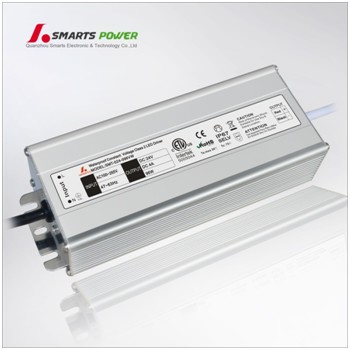
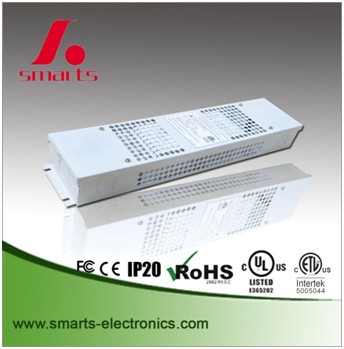
A LED Driver be required for every led light source. Some tape light and MR- bulbs, as well as certain fixtures, panels, or outdoor-rated lights, usually require a separate driver. Most places supply higher voltage (120-277V), alternating current electricity. An LED driver’s main purpose is to modify higher voltage, alternating current to low voltage, direct current. 12v LED Drivers also protect LEDs from current or voltage fluctuations. A change in voltage could cause a change in the current being supplied to the LEDs. LED light output is proportional to its current supply, and LEDs are rated to operate within a certain current range (measured in amps). Too much or too little current can therefore cause light output to vary or degrade faster due to higher temperatures within the LED.

LED driver can be divided into two types. Constant Current LED Driver and Constant Voltage LED Driver. Constant-current drivers power LEDs that require a fixed output current and a range of output voltages. Smarts Electronices offers all kinds of output current led driver, such as 300ma 350ma 500ma 700ma 900ma 1050ma 1200ma 1500ma 1700ma 2000ma. Constant-voltage drivers power LEDs that require a fixed output voltage with a maximum output current. Smarts Electronics offers 12v 24v 36v 48v led drivers which are all CE UL ETL FCC listed.


More details if you want to know more about Smarts Electronics’ LED Driver power supply, just feel free to contact contact with Mr. Steven or login https://www.smarts-electronics.com/ . Smarts Electronics’ sales team and engineers are always be here to provide you timely and best help.


led light power supply

led power supply 12v

In recent years, with the continuous development of RFID technology, the application of RFID has become more and more extensive, reaching every aspect of people's daily lives.

RFID technology is known as one of the most promising technologies in the 21st century.


According to statistics, about 700 million goose meat is consumed in the country every year, of which at least 170 million goose is consumed in Guangdong Province. The reason why Guangdong can eat a lot of geese every year is inseparable from the traditional local dish: Cantonese roast goose

The production process of Cantonese-style roast goose is extremely complicated. From material selection to roasting, it involves more than 20 production processes, and more than a dozen kinds of roast goose fillings are matched and made. Any step will affect the taste of roast goose. D & H SMARTID Co., Ltd. has been committed to supporting solutions for embedded applications in the RFID industry, and has the ability to integrate production + R&D + solutions into the Internet of Things. Applying RFID technology to the tracking of food processing is a set of solutions customized according to customer needs.

A well-known roast goose chain brand in Dongguan, Guangdong took the lead in applying RFID technology to the production process of roast goose. Before roasting goose is roasted in the oven, each goose needs to go through more than 20 pretreatment processes. How to ensure the integrity of the pretreatment process is the key to achieving deliciousness.

In the pretreatment process of roasting goose, an RFID tag is added to each goose to be processed, which is equivalent to an ID card and is used to record processing information. After each process, the information is written into the RFID tag to ensure that each goose can complete each pretreatment process to ensure that each roast goose has the same delicious taste.

Apply RFID technology to product identification in the production process of various industries to ensure production quality and production efficiency analysis, and to improve the manufacturing process to increase efficiency, reduce costs, and increase benefits.

RFID technology has attracted much attention due to its long-distance reading, high storage capacity, small size, diversified shapes, anti-pollution ability and durability. It is the future of Internet of Things applications and industrial manufacturing 4.0 (intelligent manufacturing, logistics, The key technologies of healthcare, agriculture, and food supply chain will inevitably develop in a diversified direction.

The application of RFID technology to the production process of roast goose is a manifestation of the diversified development and application of RFID technology. The use of high-temperature resistant RFID tags made of food-grade PET materials to realize the full traceability of the production and processing process of roast goose, ensuring the taste of Cantonese cuisine, and making the production process more and more standardized.


RFID antenna is one of the necessary hardware for the application of RFID technology. With the rapid development of RFID technology, RFID antenna has also been developed rapidly. The goal of the antenna is to transmit the maximum energy in and out of the chip. How to match the design of the antenna with the free space and the tag chip connected to it is a factor restricting the development of the antenna.

The design and manufacture of RFID tag antennas are affected by application restrictions, the shape and physical characteristics of the objects identified by the antenna characteristics, as well as the objects around the antenna and the environment. This is an important aspect of RFID technology research in the diversified development of RFID technology applications. direction.

With the progress and development of RFID technology, more and more new RFID products have been manufactured and are well applied. In the future, the development of RFID electronic tags will also tend to be green and diversified in raw materials to meet the application needs of different industries.

With the rapid development of technology, RFID (Radio Frequency Identification) technology has gradually penetrated into various fields of our lives. As an important application tool of RFID technology, RFID handheld devices are playing an increasingly important role in various industries due to their high efficiency, accuracy, and convenience. This article will delve into and analyze the application of RFID handheld devices in various industry inventories.

1 Overview of RFID Handheld Phone Technology

RFID technology is a wireless communication technology that identifies specific targets through radio signals and reads and writes relevant data. RFID handheld devices are PDAs (portable mobile terminals) that combine RFID technology with portable mobile hardware and have specific functions such as RFID reading and writing. RFID handheld devices have the characteristics of small size, light weight, and long service life, which can quickly and accurately extract and write information.

2 The application of RFID handheld devices in various industry inventories

1. Retail industry

In the retail industry, RFID handheld devices are a powerful assistant for inventory management and inventory. By attaching RFID tags to products and using RFID handheld devices for scanning, retailers can update inventory data in real-time, ensuring the accuracy of inventory information. In addition, RFID handheld devices can help retailers conduct rapid inventory, reduce labor and time costs, and improve operational efficiency.

2. Manufacturing industry

In the manufacturing industry, RFID handheld devices play an important role in production process control and asset management. By applying RFID tags to components and equipment on production lines, manufacturers can use RFID handheld devices to track production progress in real-time and optimize production processes. Meanwhile, RFID handheld devices can also be used for asset management of devices, ensuring accurate location and maintenance records, improving device utilization and lifespan.

3. Logistics and Supply Chain Management

In the fields of logistics and supply chain management, RFID handheld devices are key tools for tracking and managing goods. By attaching RFID tags to goods and using RFID handheld devices for scanning, logistics companies can real-time understand the location and status of goods in the supply chain, achieving full process visualization of goods. This helps enterprises optimize transportation and logistics processes, improve transportation efficiency and customer satisfaction.

4. Library management

The traditional book inventory method requires scanning and recording book information one by one, which is very time-consuming and cumbersome. By using RFID technology, multiple tag information can be read simultaneously by simply approaching the storage location of the scanned book with an RFID handheld terminal, greatly improving the inventory speed. By pasting an RFID tag on each book as a unique identification. The use of RFID handheld terminals allows for quick and accurate counting within the museum, achieving fast speed and high accuracy.

5. Asset management

In enterprise fixed asset management, RFID handheld devices are used for asset inventory and tracking management. RFID handheld devices have powerful tag group reading capabilities, which can quickly read and identify RFID tags on each asset, and match them with information in the database, improving the efficiency and accuracy of inventory work. In addition, by attaching RFID tags to assets, enterprises can use RFID handheld devices to quickly and accurately obtain information on the location, usage status, and other information of assets. This helps enterprises to have real-time understanding of asset status, improve asset utilization and management efficiency.

6. Warehouse management

Compared to traditional inventory methods, RFID handheld terminals have significantly improved work efficiency. Warehouse administrators can easily scan item labels with an RFID handheld device to complete inventory work, eliminating the need to scan barcodes one by one or perform manual counting. By scanning the RFID tags on the goods, the handheld device can quickly read the information of the goods, such as quantity, type, batch, etc., and update it in real-time to the warehouse management system. This not only reduces the time and error rate of manual inventory, but also enables real-time inventory monitoring and early warning, improving the intelligence level of warehouse management.

3 Industry Case Study

Taking a clothing retail enterprise as an example, it uses RFID handheld devices for inventory counting and product tracking. By attaching RFID tags to each item and using RFID handheld devices for scanning and recording, enterprises have achieved real-time monitoring and rapid inventory of product inventory. At the same time, RFID handheld devices can also synchronize data with the backend system in real-time, ensuring the accuracy and timeliness of inventory data. This management method greatly improves the efficiency and accuracy of inventory management, and reduces the risk of goods loss.

With the rapid development of information technology and the advancement of smart city construction, RFID smart bookcases, as an emerging intelligent management tool, have received increasing attention and favor from libraries, schools, enterprises, and public service institutions. So, how big is the domestic RFID smart bookshelf market? This article will provide you with an in-depth analysis of the demand, scale, and prospects of this market. As the channels for obtaining real data are limited, the market forecast data and calculation results in this article are for reference only.

Market demand for RFID smart bookcases

Library and Education Sector

University Library: University libraries manage a large number of books and literature materials. RFID smart bookcases can greatly improve the efficiency of book borrowing and returning, reduce manual operations, lower management costs, and enhance the user experience for teachers and students. At the same time, smart bookcases can achieve precise inventory and quick positioning, improving management efficiency.

Public Library: As an important place for social education, public libraries need to meet the needs of a wide range of readers. The self-service borrowing and returning function of RFID smart bookcases can not only reduce readers' waiting time and improve service quality, but also help libraries achieve efficient book management and reduce manual workload.

Primary and secondary school libraries: Primary and secondary school libraries are important places for students to acquire knowledge. The introduction of RFID smart bookcases not only facilitates students' self-service borrowing and returning of books, but also cultivates their reading habits and information literacy, providing schools with intelligent management tools.

Enterprise and Public Services

Internal management of enterprises: In large enterprises and research institutions, RFID smart bookcases can be used to manage internal books and materials, achieving efficient knowledge management and data archiving. Enterprise employees can quickly find the necessary information and improve work efficiency through the self-service borrowing and returning system.

Community service: In the construction of smart cities, the intelligent transformation of community bookshelves has become an important component. RFID smart bookcases can not only provide convenient reading services for community residents, but also achieve cross regional book resource sharing through networking, improving book utilization.

Market size calculation of RFID smart bookshelf

Global RFID Market Size

According to market research reports, the global RFID market is expected to reach a size of $16.4 billion in 2023 and grow at a compound annual growth rate (CAGR) of around 10%. It is projected to reach $18.04 billion by 2024.

Java Card is a microprocessor-based smart card, which consists of multiple elements: hardware, Java Card operating system, security module (card manager) and one or more Applets at the time of release.


Hardware

There are various hardware manufacturers, but, it should be noted that the most popular are NXP and Infineon. The two silicon manufacturers ship millions of microprocessor chips worldwide each year. They have been certified by EMVCo, Visa, MasterCard and UnionPay International to provide you with a hardware platform with first-class security.


operating system

Java Smart Card OS is an operating platform that utilizes hardware functions and allows applications (small programs) written in the Java programming language to run on the card. Java Card is an open platform, and its standards (and development kits) are available for free from Oracle’s Java website.


Card manager

One of the main functions of the microprocessor card is its security function. A separate area of the chip is designated specifically for this purpose, the “card manager”. This is an application that permanently resides on the chip, has the function of performing card and applet management, and is a gateway to a security element (called a security domain). This central component is defined by another open platform standard GlobalPlatform.


GlobalPlatform (globalplatform.org) is an independent standards body run by its members. Members include Apple, Oracle, Samsung, American Express, Gemalto, NXP, HID, Visa, Infineon, MasterCard, etc.


Applets

An applet is a program that runs on the card that the user (or terminal) will interact with. Each card can load one or more small programs at the same time, depending on the available storage space of the chip. Not all applets have to be the same, their size and functions can be different. The applet can use the card manager for security purposes (such as authentication), or it can write its own security domain into it. Once the applet is installed, the terminal can communicate directly with it without needing to know the card manager. When you put the card in the terminal, you can select a small application, or you can select a small application as the default application.


When choosing a Java Card product that meets your requirements, there are many considerations to consider. The universal smart card can guide you through these operations in order to specify the correct card for your project.


starting point

A good starting point is to answer the following questions:

What do you want to use the card for?

What applications will the card be used for?

Do you need contact, non-contact or dual interface?

How much storage space is needed on the card?


Getting answers to these questions will help find the correct hardware, operating system, and model of any particular Applet you may need. Developers who write their own applets only need to care about the specific hardware functions required and the relevant specifications of the Java Card OS and GlobalPlatform.


If you are looking for a Java card,java chip card and need help choosing the right Java card for your project, please email us at sales@smartcardrfidtag.com.

In the vast ocean of the digital world, we navigate the intertwined waterways of physical and virtual, exploring more efficient and secure communication methods. Every technological development is as brilliant as a star, and Radio Frequency Identification (RFID) technology stands out among numerous technological achievements with its unique brilliance. It quietly changes our lives with an invisible hand, from supermarket checkout to highway toll collection, and then to contactless payment - almost everywhere, leading us on this journey.

RFID technology is a wireless communication technology that enables contactless transmission of information through radio waves. It not only simplifies our daily lives - from payment cards to logistics tracking, we cannot do without its presence; However, as the application scope of this technology continues to expand, its potential security issues have also surfaced: identity theft, data leakage... These issues, like ghosts, threaten the peace and order of the digital world. In the context of global information security, players are playing an increasingly important role. To discuss the security of RFID, it is necessary to mention its key link: security authentication. Therefore, ensuring the security of RFID technology has become an urgent task, and this has given rise to the key process of three security authentication.

When it comes to security authentication, people often think of complex passwords and complex operations. However, in the world of RFID, everything becomes different. The first security authentication here is not initiated by the user, but automatically performed by the system. When a card or item with a chip approaches the reader, the first step is the detection phase. If the match is successful, it enters the activation state and there is a short time window for both parties to exchange data. This non-contact startup process greatly facilitates the user's operating experience and lays the foundation for subsequent security measures.

Next is the process of the second security certification. This time it's the user's turn to participate. Users need to enter a Personal Identification Number (PIN) or other forms of identity verification to prove their ownership of the card. This step is equivalent to an access control, only those who know the correct method of opening the door can further access the information inside the card or perform transactions and other operations.

Finally, we come to the third security certification. This is an additional layer of protection established for high-risk operations. For example, in certain financial transactions, even after the first two identity confirmations, third-party verification methods such as SMS verification codes or phone verification may still be triggered. This multiple protection mechanism makes it difficult for criminals to obtain all benefits smoothly even if one layer is cracked.

When we turn our gaze back to the real world, it is not difficult to find that behind every progress lies the result of countless explorations and experiments. As demonstrated by RFID technology, even a small piece of paper thin label may contain countless wisdom crystals and expectations for infinite possibilities in the future.

With the development of technology and social progress, future RFID technology will become more intelligent and deeply integrated into daily life. At the same time, we also believe that with the emergence of new challenges, corresponding solutions will emerge one after another, making this digital era more convenient, intelligent, and secure.


RFID PRODUCTS: there have RFID card, RFID wristband, RFID tag and RFID reader.

With the acceleration of urbanization and the increasing demand for residents' travel, the number of electric bicycles has grown sharply. This directly led to a sharp increase in management difficulty. In busy urban traffic, electric bicycles have become an important means of transportation, but their rapid increase makes it difficult for regulatory authorities to fully cover and effectively manage them.

Industry pain points

1. Electric bicycles are parked randomly, occupying pedestrian walkways indiscriminately, obstructing pedestrians' travel, and increasing traffic risks. Inconsistent parking direction,

2. The backend site does not match the actual parking space line, and users return their bikes outside of the planned parking space after cycling, which increases the workload of operation and maintenance personnel in moving bikes and increases operating costs.

3. The safety awareness of electric bicycle drivers varies greatly, and some drivers lack knowledge of traffic regulations and do not comply with traffic rules. This non-standard driving behavior not only threatens the safety of the driver themselves, but also poses potential risks to other traffic participants

4. Severe cases can block fire exits, pedestrian evacuation routes, etc., posing serious fire rescue safety hazards, delaying the best time, and posing a threat to people's lives and property!

Solution

To standardize the parking of shared electric vehicles, strengthen the supervision and management of shared electric vehicles, reduce the management costs of operation and maintenance enterprises, promote orderly parking of shared electric vehicles, and avoid safety hazards such as affecting the city's appearance, obstructing traffic, battery fires, loss and damage caused by disorderly parking of vehicles. Therefore, Shenzhen Wanquan Intelligent R&D utilizes intelligent sensing RFID wireless radio frequency identification technology to effectively provide product solutions for issues such as electric vehicle parking management.

1. Vehicle identification and traceability

Unique identification: The RFID electronic license plate is embedded with ultra-high frequency RFID electronic tags, which write vehicle information and ensure data security and reliability. It is not only anti-counterfeiting and anti duplication, but also has a unique identification QR code printed on the outer surface, which can be used as the unique identification of the vehicle, effectively solving problems such as forgery, alteration, and obstruction of license plates, thus achieving traceability and supervision of electric bicycles.

Information recording: RFID tags can record vehicle license plates, models, colors, chassis numbers, insurance and other information, and can flexibly add other information according to needs, providing comprehensive and accurate data support for vehicle management.

2. Improve traffic management efficiency

Automatic identification and tracking: By setting up high protection RFID readers on busy road sections, automatic identification, positioning, tracking and management of electric bicycles can be achieved, improving the intelligence level of traffic management.

Illegal behavior capture: Combined with electronic police cameras, it can automatically capture illegal behaviors such as running red lights, going in the wrong direction, and not wearing helmets around the clock, achieving remote law enforcement and improving law enforcement efficiency and accuracy.

3. Assist in smart transportation and urban management

Smart Transportation: With the continuous advancement of autonomous driving and intelligent vehicle networking, RFID electronic license plates are very suitable for integration into the collaboration of "people, vehicles, and roads", helping the development of smart transportation and promoting the vigorous development of the automotive industry.

Urban management: The application of RFID electronic license plates can also be combined with community access control systems, smart facial recognition systems, etc., to achieve comprehensive safety management of electric bicycles and improve the level of refinement in urban management.

4. Anti theft and security measures

Anti theft management: The application of RFID electronic license plates can help solve the problem of electric bicycles being stolen and robbed. After a vehicle is stolen, RFID technology can be used to trace the vehicle's trajectory, which helps the police quickly recover the stolen vehicle and ensure the safety of the owner's vehicle property.

Charging and Parking Management: The RFID electric bike rental system relies on management base stations (RFID card readers) installed in unit corridors or elevators, battery identity chips, and access control recognition linkage systems to achieve community parking, safe charging, and household control of electric bicycles with one vehicle, one pool, one code, and one person identity binding. When an electric vehicle (battery) enters the unit door or elevator, the system will identify and prevent it from causing fires and injuries due to charging at the entrance.
keyboard_arrow_up