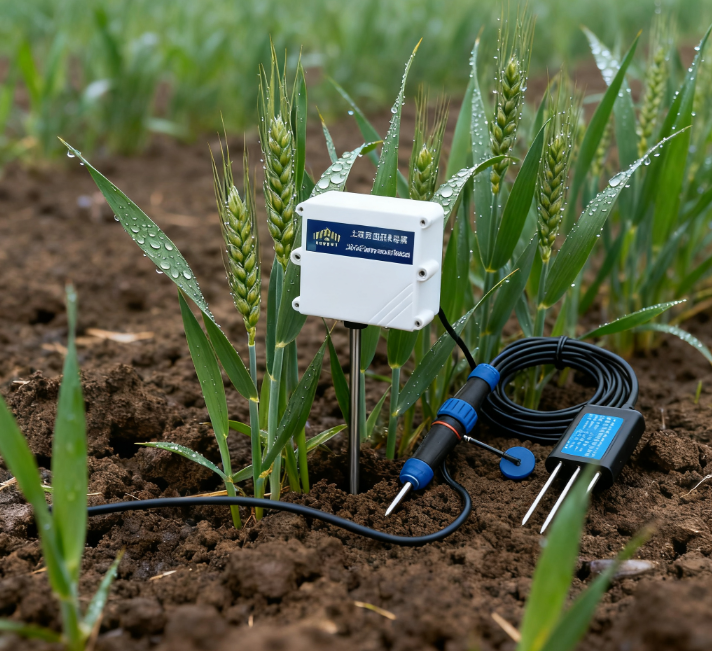
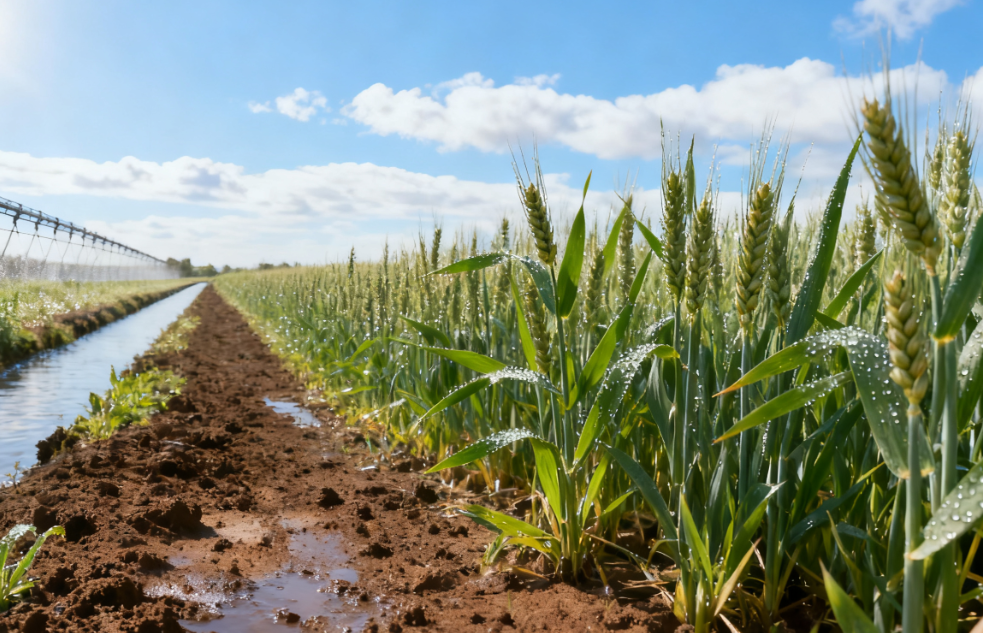
Against the backdrop of the accelerated advancement of global agricultural modernization, precision agriculture has become the core path for enhancing agricultural production efficiency, ensuring food security, and achieving sustainable agricultural development. As a core device for obtaining key soil data in precision agriculture, the LoRaWAN soil sensor not only resolves many pain points of traditional agriculture, providing a scientific basis for management decisions such as precise irrigation and precise fertilization, but also promotes the deep integration of agriculture and advanced technologies with its excellent performance, becoming an important engine driving the modernization and upgrading of agriculture. as follows:
1.Solving the pain points of traditional agriculture, the LoRaWAN soil sensor is the core hub for data acquisition
- Traditional agriculture relies on experience to judge key indicators such as soil moisture and nutrient content, which is lagging and subjective, and is prone to problems such as water resource waste and fertilizer abuse.
- LoRaWAN soil sensor can collect data such as soil temperature, humidity, pH value, EC,and electrical conductivity (reflecting nutrient status) in real time and accurately, breaking the limitations of "planting by feeling", providing scientific and reliable data support for agricultural production, and solving the pain points of difficult data acquisition and low accuracy in traditional agriculture from the source.
2. Empowering precision agricultural management, LoRaWAN soil sensors are a key basis for decision-making
- In the field of precision irrigation, the LoRaWAN soil sensor transmits soil moisture data in real time. Combined with the water requirement patterns of crops, it can enable the intelligent irrigation system to automatically adjust the duration and volume of water supply, avoiding overirrigation or water shortage and drought, and improving the utilization rate of water resources by more than 30% (the data can be adjusted according to actual cases).
- In the precise fertilization process, the soil nutrient data monitored by LoRaWAN soil sensors can accurately determine the types and amounts of fertilizers needed by crops, formulate personalized fertilization plans, reduce fertilizer waste, lower the risk of soil pollution, and at the same time increase crop yields and quality, achieving refined management of "supply based on demand".
3.LoRaWAN soil sensors are an important engine for industrial transformation, promoting the modernization and upgrading of agriculture
- In the process of global agricultural modernization, large-scale and intelligent planting has become a trend. LoRaWAN soil sensors can be integrated with technologies such as the Internet of Things, big data, and artificial intelligence to build a smart agricultural management platform, enabling remote monitoring and centralized management of soil conditions in large areas of farmland, reducing labor costs, and improving planting efficiency.
- Compared with ordinary soil sensors, LoRaWAN soil sensors have advantages such as strong stability, outstanding anti-interference ability, and long service life. They can adapt to complex environments with different climates and soil types, and are widely used in precision agriculture projects in different regions around the world, accelerating the transformation of agriculture from "traditional extensive" to "modern precise".
Summary
In the future, as precision agriculture further develops, the significance of LoRaWAN soil sensors will become increasingly prominent, injecting stronger impetus into the high-quality development of global agriculture.