Hello and welcome to the Gvlcd blog, your trusted resource for insights into TFT LCD technology. As a leading manufacturer of high-quality LCD displays, we often get asked a fundamental question: "What screen resolution do I need for my application?"


Understanding TFT LCD display resolution is crucial for selecting the right panel. It directly impacts the clarity, sharpness, and amount of information you can fit on the screen. In this article, we’ll break down common resolution standards, from the classic QVGA to stunning 4K, and guide you on how to choose the perfect one for your project.


What Exactly is TFT LCD Display Resolution?

Simply put, resolution refers to the number of distinct pixels that make up the display image. It is expressed as (number of horizontal pixels) x (number of vertical pixels). A higher resolution means more pixels are packed into the same screen size, resulting in a sharper, more detailed image with less visible "pixelation."


For TFT (Thin-Film Transistor) LCDs, each pixel is made up of three sub-pixels (red, green, and blue) controlled by its own transistor, allowing for precise control, faster response times, and superior image quality compared to older LCD technologies.


A Guide to Common Resolution Standards

Here’s a overview of the most common TFT LCD resolutions you will encounter.


1. QVGA (Quarter Video Graphics Array)

Resolution: 320 x 240 pixels


Aspect Ratio: 4:3


Usage: Once the standard for early mobile devices and handheld equipment, QVGA is now primarily used in low-cost, low-power industrial applications, simple consumer electronics, and secondary status displays where high detail is not required.


2. HVGA (Half-size VGA)

Resolution: 480 x 320 pixels


Aspect Ratio: 3:2


Usage: served as a stepping stone between QVGA and VGA, famously used in earlier smartphones like the first-generation iPhone. Its use has declined but can still be found in some specific industrial and medical devices.


3. VGA (Video Graphics Array)

Resolution: 640 x 480 pixels


Aspect Ratio: 4:3


Usage: A historical benchmark for PC graphics. While considered low-resolution by today's standards, VGA interfaces are still widely supported in industrial, medical, and embedded systems due to their simplicity and universal compatibility.


4. SVGA (Super Video Graphics Array)

Resolution: 800 x 600 pixels


Aspect Ratio: 4:3


Usage: Offers a noticeable improvement over VGA. SVGA is commonly found in human-machine interface (HMI) panels for industrial machinery, point-of-sale (POS) systems, and some medical monitoring devices.


5. XGA (Extended Graphics Array)

Resolution: 1024 x 768 pixels


Aspect Ratio: 4:3


Usage: For many years, this was the standard resolution for desktop monitors and laptops. It remains a very popular resolution for industrial and medical applications where a 4:3 aspect ratio is ideal for displaying data and traditional software interfaces.


6. WXGA (Widescreen Extended Graphics Array)

Resolution: 1280 x 800 pixels


Aspect Ratio: 16:10 (Widescreen)


Usage: This widescreen format marked the shift to broader displays. It is extremely common in modern industrial touch panels, portable devices, and consumer laptops, offering more horizontal space for navigation and data visualization.


7. HD / 720p (High Definition)

Resolution: 1280 x 720 pixels


Aspect Ratio: 16:9


Usage: The entry-level for HD video. HD resolution is used in smaller digital signage, automotive displays, and various multimedia devices where clear video playback is a key requirement.


8. Full HD / 1080p (FHD)

Resolution: 1920 x 1080 pixels


Aspect Ratio: 16:9


Usage: The current benchmark for high-definition content. Full HD is ubiquitous in consumer televisions, monitors, and high-end industrial displays used for detailed graphics, complex HMIs, and premium digital signage.


9. 4K UHD (Ultra High Definition)

Resolution: 3840 x 2160 pixels


Aspect Ratio: 16:9


Usage: Representing the cutting edge of clarity with over 8 million pixels, 4K delivers breathtaking detail. Its applications are growing rapidly in high-end digital signage (e.g., video walls), professional medical imaging, detailed CAD/CAM designs, and luxury entertainment systems.


How to Choose the Right Resolution for Your Application

Selecting the optimal resolution is a balance between technical requirements and cost. Here are key factors to consider at GoldenScope:


Content and Purpose: What will be displayed?


Text & Simple Graphics: Lower resolutions like SVGA or XGA may be sufficient and cost-effective.


Detailed Graphics & HMIs: WXGA or Full HD provides the necessary clarity and screen real estate.


High-Resolution Imagery & Video: 4K UHD is essential for medical imaging, video production, and premium advertising.


Screen Size: A higher resolution is necessary on a larger screen to maintain a high PPI (Pixels Per Inch) value and avoid a grainy, pixelated image. A 7-inch screen with XGA resolution will look very sharp, while a 20-inch screen with the same resolution will look poor.


Viewing Distance: Will users be close to the screen (e.g., a smartphone) or far away (e.g., a highway billboard)? The farther the viewing distance, the lower the required PPI and resolution can be.


System Compatibility & Cost: Higher resolution displays require more powerful processors and graphics controllers to drive all those pixels, which increases system cost and power consumption. Ensure your hardware can support your chosen resolution.


Interface Compatibility: Verify that your system's video output (e.g., LVDS, eDP, HDMI) supports the desired resolution.


Conclusion

From the basic clarity of QVGA to the immersive detail of 4K, understanding TFT LCD display resolution is key to building a successful product. There is no one-size-fits-all answer; the best choice depends entirely on your specific application, user experience goals, and technical constraints.


At Goldenvision, we help our clients navigate these choices every day. We offer a wide range of TFT LCD modules in various resolutions, sizes, and configurations to meet your precise needs.


Ready to find the perfect display for your project? [Contact our technical experts today] for a personalized consultation and let Goldenvision bring your vision to life with clarity and precision.

Welcome to the Gvlcd blog, where we illuminate the world of LCD technology. As a leading TFT LCD manufacturer, we know that integrating a touch screen is a critical decision that defines the user experience of any device. Two technologies dominate the market: Capacitive and Resistive.


Choosing the right one is essential for performance, durability, and cost. This article will break down the differences between capacitive and resistive touchscreen TFT LCDs to help you make the perfect choice for your application.


How Does a Touch Screen Work with a TFT LCD?

A touch screen is a transparent panel placed over a TFT LCD display. It detects the presence and location of a touch within the display area. This signal is then sent to the controller and processed, allowing the user to interact directly with what is shown on the screen.


Resistive Touch Technology: The Durable Workhorse

A resistive touchscreen is a passive technology consisting of two flexible, transparent layers separated by a small air gap. The inside surfaces are coated with a resistive material (like ITO).


How it Works: When you press the screen, the two layers make contact at the precise point of touch. The controller detects this change in electrical current and calculates the (X,Y) coordinates.


Activation Method: Pressure from a finger, gloved hand, stylus, or any object.


Key Advantages:


Cost-Effective: Generally less expensive to manufacture.


High Durability: Resistant to surface contaminants like dust, water, and moisture.


Input Flexibility: Can be operated with any object—ideal for environments where users wear gloves.


High Accuracy: Well-suited for precise input with a stylus.


Considerations:


Lower Clarity: The multiple layers can reduce optical clarity and brightness by up to 25%.


Less Durable: The flexible top layer can be scratched or punctured by sharp objects.


No Multi-Touch: Standard resistive screens typically only register single-touch input.


Capacitive Touch Technology: The Modern Standard

A capacitive touchscreen is an active technology. It features a glass panel coated with a transparent conductive material (like ITO).


How it Works: It holds an electrostatic charge. When a conductive object (like a human finger) touches the screen, it draws a minute amount of current, creating a voltage drop. The controller measures this change from each corner of the screen to pinpoint the touch location.


Activation Method: Requires the electrical conductivity of a bare finger or a specialized capacitive stylus.


Key Advantages:


Superior Clarity: Offers excellent optical transparency and brightness (>90%), resulting in a sharper image.


Enhanced Durability: The glass surface is highly scratch-resistant and durable.


Multi-Touch Support: Native support for modern gestures like pinch-to-zoom, swipe, and rotate.


Excellent Touch Feel: Provides a very smooth, responsive user experience.


Considerations:


Higher Cost: More complex technology leads to a higher price point.


Glove Limitations: Cannot be operated with a standard glove or a non-conductive stylus.


Sensitivity to EMI: Can be susceptible to electromagnetic interference in harsh environments.


Feature

Resistive Touch

Capacitive Touch

Touch Activation

Pressure

Electrical Conductivity

Input Method

Finger (gloved/bare), Stylus, Any object

Bare finger, Capacitive stylus

Multi-Touch

No (Typically single-touch)

Yes (Native support)

Optical Clarity

Lower (~75-80% light transmission)

Higher (>90% light transmission)

Durability

Good (Scratch-prone surface)

Excellent (Hard glass surface)

Cost

Lower

Higher

Resistance to

Liquids, Dust, Contaminants

Scratches, Wear

Ideal For

Industrial controls, Medical devices, POS systems, Rugged environments

Smartphones, Tablets, Consumer electronics, Interactive kiosks


How to Choose: Which One is Right for Your Project?

The best choice depends entirely on your application's specific needs and environment.


Choose a Resistive Touch TFT LCD if:


Your users will be wearing gloves (e.g., factory workers, medical staff).


You need to use a stylus for precise input (e.g., signature capture, industrial menu navigation).


The operating environment has high levels of dust, moisture, or other contaminants.


Your project has a strict budget constraint.


Multi-touch functionality is not a requirement.


Choose a Capacitive Touch TFT LCD if:


You are designing a consumer-facing product where a premium look and feel are critical.


Your interface requires multi-touch gestures (pinch, zoom, swipe).


Image clarity, brightness, and color vibrancy are top priorities.


The primary input will be from a bare finger.


You require a highly durable, scratch-resistant glass surface.


Conclusion: Partner with the Right Expert

Both resistive and capacitive technologies have their rightful place in the world of TFT LCD displays. Understanding their core differences is the first step to a successful product design.


At Goldenvision, we don't just supply displays; we provide solutions. Our technical experts can guide you through this selection process, helping you choose the perfect touch technology for your specific application, whether it's a rugged industrial HMI or a sleek consumer interface.


When selecting alumina ceramic materials for industrial applications, manufacturers often face one key decision — should you choose 95% alumina ceramic or 99% alumina ceramic?
Both materials offer excellent mechanical strength, corrosion resistance, and thermal stability. However, their performance, cost, and ideal use cases vary significantly.

Alumina (Al₂O₃) is one of the most widely used advanced ceramics in industrial applications. Its excellent hardness, dielectric strength, and wear resistance make it ideal for electrical, mechanical, and chemical equipment.
The purity level of alumina—95%, 96%, 99%, or higher—greatly affects its mechanical and thermal performance.

95% Alumina Ceramic contains small amounts of impurities and additives (such as SiO₂ or MgO) to improve sintering efficiency and reduce production costs.

99% Alumina Ceramic, on the other hand, offers ultra-high purity and density, providing superior insulation and strength for demanding environments.


Property 95% Alumina 99% Alumina
Al₂O₃ Content ≥95% ≥99%
Density (g/cm³) 3.7–3.8 3.9+
Flexural Strength (MPa) 250–300 320–380
Hardness (HV) 1500 1800
Maximum Working Temperature (°C) ~1500°C ~1700°C
Electrical Insulation (Ω·cm) 10¹² 10¹⁴
Thermal Conductivity (W/m·K) 20–25 30+
Cost Lower Higher


1. Choose 95% alumina when you need a balance between performance and cost. It’s commonly used in:


Because of its excellent wear resistance and mechanical strength, it performs well under moderate temperature and mechanical load conditions.


2. Choose 99% alumina ceramic when you require maximum purity, insulation, and temperature resistance. Ideal applications include:


99% alumina is part of high temperature ceramics and can maintain structural integrity above 1600°C, making it essential for extreme industrial environments.


When comparing 95% vs 99% alumina ceramics, the right choice depends on your performance needs and budget.
If you prioritize cost efficiency and durability, go for 95% alumina.
If your project demands maximum purity and heat resistance, 99% alumina is the superior option.


As a leading alumina ceramic manufacturer in China,Yixing Shenxing Technology Co., Ltd. provides a full range of 95% and 99% alumina ceramic components, customized to meet industry-specific requirements.
With isostatic pressing, hot pressing, and precision grinding technology, we ensure:


Whether you need industrial alumina components for electronics, machinery, or new energy systems, yxsxceramic technical team can help you choose the most suitable alumina grade for your application.


In power electronics, the eternal challenge is achieving higher power density, lower losses, and greater efficiency — all in smaller, lighter systems.

For decades, engineers have pushed the limits of magnetic materials to make this possible. Now, a new generation of material — the nanocrystalline alloy — is unlocking what once seemed impossible.

It’s not just an upgrade to existing cores.

Magnetic Materials
It’s a paradigm shift in electromagnetic design — enabling solid-state transformers, EV fast chargers, and next-generation power converters to go further, faster, and cooler.


1. The Efficiency Equation: Where Every Watt Counts

In modern energy systems, even a 1% gain in conversion efficiency can translate to megawatt-hours of saved energy and millions of dollars in reduced operating costs.

Traditional materials — silicon steel or ferrite — struggle as switching frequencies increase. Their eddy current losses rise exponentially, creating excessive heat and forcing bulky cooling systems.

Nanocrystalline alloys rewrite that equation:

  • High resistivity (~120 μΩ·cm) drastically cuts eddy current losses.

  • Fine grain size (<20 nm) reduces domain wall motion losses.

  • Uniform microstructure ensures consistent magnetic performance even under thermal stress.

As a result, core loss can be reduced by up to 70%, directly improving overall system efficiency — a critical advantage for solid-state transformers (SSTs), DC/DC converters, and high-frequency inverters.

In power electronics, less heat = less waste = longer life.
That’s why nanocrystalline cores aren’t just about performance — they’re about system reliability.


2. Shrinking the Core, Expanding the Possibilities

Every watt saved also means less magnetic material needed.

With permeability levels in the range of 10⁵–10⁶, nanocrystalline cores allow designers to achieve the same magnetic flux with 40–70% less volume compared to ferrite or amorphous cores.

That translates to:

  • Smaller transformers and inductors

  • Lighter EV charger modules

  • Compact high-density data center power supplies

And because nanocrystalline maintains stable permeability across frequencies from 1 kHz to 100 kHz, engineers no longer need to trade size for efficiency.

In the race to miniaturize power systems, nanocrystalline alloys have become the ultimate enabler.


3. Real-World Impact: From Fast Chargers to AI Power Grids

Let’s look at some numbers:

  • A 30 kW EV fast charger requires around 3–4 kg of nanocrystalline core, reducing system losses by up to 2%.

  • A 100 kVA solid-state transformer using nanocrystalline can be 40% smaller and 15–25°C cooler than one with amorphous cores.

  • In large data centers, even a 1% boost in efficiency at the power distribution level can save tens of millions of kWh annually.

From the roadside charger to the AI supercomputer, energy efficiency is now a material challenge — and nanocrystalline alloys are the answer.


4. Engineering for the Future: Why This Matters

Power electronics is entering a new era — high frequency, high density, and high intelligence.

But that progress depends on what’s inside the magnetic core.
Without materials that can handle high flux, high frequency, and high temperature simultaneously, innovation stalls.

Nanocrystalline alloys break that bottleneck.
They bring:

  • High magnetic flux density (1.2–1.6 T)

  • Low losses at high frequency

  • Thermal and magnetic stability across wide temperature ranges

This unique balance between structure and performance makes nanocrystalline the material foundation of the next generation of power systems.


5. The Big Picture: Material Innovation Drives Energy Innovation

From EV charging to AI datacenters, microgrids to renewable integration, the most advanced systems share one truth — they all rely on efficient magnetic materials.

Nanocrystalline alloys are no longer a lab experiment.
They’re being mass-produced, cost-optimized, and integrated into commercial products worldwide.

Just as silicon enabled the digital revolution, nanocrystalline alloys are becoming the core material of the energy revolution.


Nanocrystalline cores redefine the boundaries of power electronics.
They make systems smaller, cooler, smarter, and more efficient.

In the transition toward electrification and intelligent power, this is the material that makes the impossible possible.

As 5G-Advanced (5G-A) technology emerges, it brings higher speeds, lower latency, and smarter network capabilities, reshaping expectations for in-building wireless systems. Modern facilities—such as offices, airports, and hospitals—now require more advanced Distributed Antenna Systems (DAS) capable of supporting higher frequency bands and broader bandwidths.

Traditional infrastructure must evolve. Key components such as antennas, directional couplers, power splitters, isolators, and step attenuators play a critical role in enabling seamless indoor coverage with minimal signal loss and high reliability.

At Maniron Electronics, we are dedicated to meeting these new demands. Our full range of RF solutions is engineered to optimize performance for 5G and 5G-A deployments, ensuring flexible system design and superior signal quality across multi-band networks. Our products are widely applied in both commercial and public safety projects, helping partners build future-ready communication systems.

With strong R&D capabilities and advanced manufacturing, Maniron offers customized RF solutions to adapt to diverse in-building scenarios. Whether supporting high-density IoT environments or mission-critical networks, we are committed to delivering quality, innovation, and service excellence.

In the world of RF passive components—such as couplers, attenuators, splitters, and terminators—RF connectors play a crucial role in ensuring signal integrity, mechanical reliability, and ease of integration. Choosing the right connector is essential for system performance, especially in 4G/5G base stations, DAS (Distributed Antenna Systems), and other high-frequency communication systems.

Below, we explore the most commonly used RF connector types in passive devices and their practical applications.


1. 7/16 DIN Connector

  • Frequency range: Up to 7.5 GHz

  • Impedance: 50 ohm

  • Features: Rugged, weatherproof, and low intermodulation (PIM)

  • Applications: Widely used in outdoor base stations, high-power RF systems, and feeder lines.

Why it’s common: The 7/16 DIN is known for its durability and stable performance in harsh outdoor environments. Its screw-type design ensures reliable mating.


2. N-Type Connector

  • Frequency range: DC to 11 GHz

  • Impedance: 50 ohm

  • Applications: Indoor/outdoor RF systems, antennas, repeaters, and test setups.

Strength: It offers a good balance between size, performance, and cost. Often seen in indoor RF networks and lower-power outdoor setups.


3. 4.3-10 Connector

  • Frequency range: Up to 12 GHz

  • Impedance: 50 ohm

  • Advantages: Compact size, lower PIM, and lightweight

  • Usage: Replacing 7/16 DIN in modern telecom setups, especially 5G deployments.

Note: The 4.3-10 comes in push-pull, hand-screw, and threaded types, giving flexibility in installation and maintenance.


4. SMA Connector

  • Frequency range: Up to 18 GHz (standard), 26 GHz (precision)

  • Impedance: 50 ohm

  • Usage: Lab test setups, IoT devices, low-power RF modules.

Why it’s used: Its compact design and wide frequency support make SMA ideal for indoor test equipment and high-frequency signal routing.


5. BNC Connector

  • Frequency range: Up to 4 GHz (depending on type)

  • Impedance: 50 or 75 ohm

  • Application: Test equipment, video systems, low-frequency RF signal routing.

Note: Quick connect/disconnect feature makes it convenient for lab environments.


Choosing the Right Connector for Your RF Passive Device

The choice of connector depends on factors like:

  • Frequency range of your system

  • Power level requirements

  • Environmental exposure (indoor vs. outdoor)

  • PIM sensitivity for 4G/5G networks

  • Mechanical durability and ease of installation

For modern communication systems—especially in 5G, IoT, and satellite applications—low-PIM and high-frequency support are becoming increasingly important in connector selection.


What Is a VHF Antenna?

VHF antennas operate within the Very High Frequency range of 30 MHz to 300 MHz. These antennas are commonly used in:

  • FM radio broadcasting (88–108 MHz)

  • Marine radio communication (156–174 MHz)

  • Aviation communication systems

  • Emergency and amateur radio operations

Due to their longer wavelengths, VHF antennas perform well in open and rural environments where line-of-sight coverage is available. However, they tend to be more affected by obstructions like buildings and terrain.


What Is a UHF Antenna?

In contrast, UHF antennas function within the Ultra High Frequency spectrum, ranging from 300 MHz to 3 GHz. Typical applications include:

  • Walkie-talkies and handheld radios (400–470 MHz)

  • Digital TV broadcasting

  • Wireless microphones and surveillance systems

  • RFID, Bluetooth, and Wi-Fi devices

Because UHF signals have shorter wavelengths, these antennas offer stronger signal penetration in dense urban or indoor environments, making them ideal for city-based communication systems.


UHF vs. VHF Antenna: Key Differences at a Glance

Feature VHF Antenna UHF Antenna
Frequency Range 30 MHz – 300 MHz 300 MHz – 3 GHz
Wavelength Longer Shorter
Signal Reach Better over long distances Better through buildings and obstacles
Penetration Ability Moderate High
Common Use Cases Marine, aviation, outdoor radio Indoor, urban, TV, RFID, handheld radios
Antenna Size Generally longer More compact

When to Choose VHF vs. UHF Antennas

Choose a VHF antenna if:

Choose a UHF antenna if:


Why the Difference Between UHF and VHF Antenna Matters

Selecting the wrong antenna type can result in signal loss, coverage gaps, or regulatory issues. For instance, using a UHF antenna in open water may cause weak signal performance, while VHF antennas in a skyscraper may suffer from reflection and obstruction.

When sourcing antennas, it's also essential to consider:

What Is an RF Filter?

An RF filter is a passive or active component that allows signals within a certain frequency range to pass while attenuating signals outside that range. Filters are essential in both transmit and receive chains to isolate specific frequencies and prevent crosstalk, interference, or signal distortion.

Types of Filters by Frequency Selection

Depending on the application, filters come in various types:

1. Low-Pass Filter (LPF)

  • Allows frequencies below a cutoff frequency to pass

  • Blocks higher frequencies

  • Used to eliminate high-frequency noise in receivers

2. High-Pass Filter (HPF)

  • Allows high frequencies to pass

  • Blocks signals below a cutoff frequency

  • Common in antenna feed networks to isolate uplink signals

3. Band-Pass Filter (BPF)

  • Passes signals within a defined frequency band

  • Rejects all others

  • Widely used in 4G/5G systems to isolate specific communication bands (e.g., 3.5 GHz, 2.4 GHz)

4. Band-Stop Filter (Notch Filter)

  • Blocks a narrow band of frequencies

  • Passes others

  • Used for interference suppression or EMI mitigation


How Do Filters Actually Work?

Filters operate based on the principles of resonance, impedance matching, and signal phase control. They are usually built from combinations of:

  • Inductors (L) – Impede high-frequency signals

  • Capacitors (C) – Block low-frequency signals

  • Resonant cavities or dielectric resonators – In cavity filters

By arranging these components in specific topologies (π-type, T-type, LC ladder, etc.), engineers can tailor the filter's frequency response curve — that is, how the signal amplitude changes with frequency.

In cavity filters, for instance, signal energy resonates within a metal cavity tuned to a particular band, creating very steep roll-off and excellent rejection outside the band.


Applications of RF Filters

Filters are used wherever frequency control is essential:

  • Base stations (macro and small cell) – Clean transmission and reception bands

  • Satellite and aerospace – Avoid overlap between communication and telemetry channels

  • IoT devices and routers – Isolate Wi-Fi and LTE signals

  • Test and measurement equipment – Prevent out-of-band noise during analysis


Key Parameters When Selecting a Filter

To choose the right filter, consider:

Parameter Meaning
Center Frequency The midpoint of the passband
Bandwidth The range of frequencies the filter allows
Insertion Loss Signal loss within the passband (lower is better)
Return Loss Indicates how well the filter matches impedance
Rejection Attenuation level outside the passband
Power Handling How much RF power the filter can tolerate

Passive vs. Active Filters

To test the power of a load, you can follow these steps:

  1. Gather Equipment: You'll need a multimeter, wattmeter, or power analyzer, depending on the accuracy required.

  2. Connect the Load: Ensure the load (such as a resistor, motor, or appliance) is properly connected to the power source.

  3. Measure Voltage: Use the multimeter to measure the voltage across the load. Make sure to set the multimeter to the correct voltage setting.

  4. Measure Current: Measure the current flowing through the load using the multimeter. If using a clamp meter, clamp it around one of the wires.

  5. Calculate Power: Use the formula:

    Power (P)=Voltage (V)×Current (I)\text{Power (P)} = \text{Voltage (V)} \times \text{Current (I)}

    for DC circuits, or for AC circuits, consider the power factor:

    Power (P)=Voltage (V)×Current (I)×Power Factor (PF)\text{Power (P)} = \text{Voltage (V)} \times \text{Current (I)} \times \text{Power Factor (PF)}
  6. Record Results: Document your measurements and calculations for reference.

  7. Safety Precautions: Always follow safety guidelines to prevent electrical hazards.

These steps will help you accurately assess the power consumption of a termination load.

- tags:

1. Introduction: The Role of Passive Components in DAS

Distributed Antenna Systems (DAS) play a vital role in enhancing wireless coverage in complex environments like airports, stadiums, hospitals, and office buildings. While active equipment such as base stations and repeaters often receive the most attention, passive components—such as power splitters, directional couplers, loads, tappers, and hybrid combiners—are essential for signal distribution and optimization within DAS infrastructure.

Their design and performance directly influence system efficiency, PIM (Passive Intermodulation) behavior, and long-term reliability.


2. Key Performance Metrics for Passive Components in DAS

When evaluating or selecting passive RF components for DAS, engineers must consider multiple performance parameters beyond just insertion loss. These include:

  • Low PIM Levels (e.g., < –150 dBc):
    Critical for high-capacity systems, particularly those supporting LTE and 5G NR. Poor PIM performance can lead to intermodulation distortion that degrades signal quality.

  • Broad Frequency Range (e.g., 698–2700 MHz / 698–3800 MHz):
    Ensures compatibility with multi-band and multi-operator systems, avoiding the need for multiple component sets.

  • VSWR and Return Loss:
    Poor impedance matching can cause signal reflection, leading to reduced efficiency and increased power loss.

  • Power Handling Capability:
    Components must support both uplink and downlink power levels, especially in high-gain DAS topologies.


3. Common Passive Devices in DAS and How to Optimize Them

Power Splitters

Power splitters divide input signals into multiple outputs with equal or specific ratios. For optimal performance:

  • Use low insertion loss designs to reduce signal degradation.

  • Ensure phase balance across outputs to maintain signal integrity.

  • Choose products with robust mechanical design and N-type or 4.3-10 connectors to ensure low PIM.

Directional Couplers

Directional couplers are used to tap off small amounts of signal for monitoring or feedback purposes.
To improve performance:

  • Select units with tight coupling accuracy and excellent directivity.

  • Ensure broadband support for DAS systems operating across wide frequency bands.

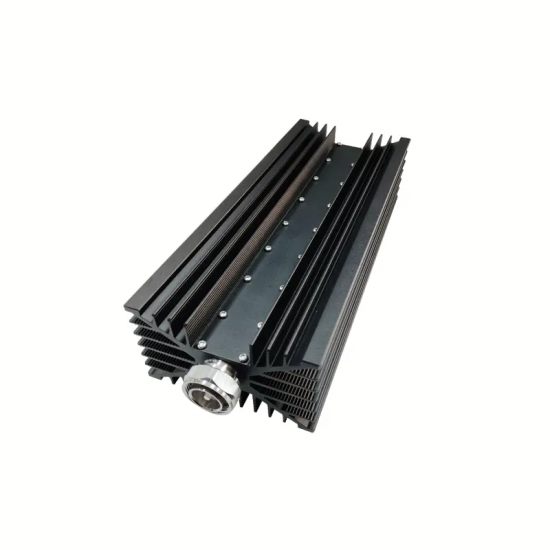
RF Loads and Terminations

Used to terminate unused ports without reflection:

  • Choose high-power, low-VSWR loads to safely dissipate RF energy.

  • Always confirm connector compatibility and thermal reliability.


4. Installation Considerations That Affect Performance

Even the highest-spec passive component can underperform if improperly installed. Key practices include:

  • Avoid tight bends or improper cable grounding that introduce unwanted reflections.

  • Maintain consistent torque across all connectors to prevent PIM spikes.

  • Keep all passive components clean and dry; contaminants can severely affect PIM.


5. Emerging Trends: 5G-Ready Passive Components

With the increasing deployment of 5G DAS, passive components must now accommodate frequencies up to 3.8 GHz and support Massive MIMO or beamforming-compatible architecture.

Look for:

  • Ultra-wideband combiners and hybrid couplers

  • Low-profile, panel-mount components for space-constrained indoor applications

  • Modular PIM testable units that allow on-site verification

keyboard_arrow_up