Since 1995, Golden Vision has been a trusted manufacturer of premium rotary knob display solutions. Explore how our knob screens enhance smart home appliances with intuitive, reliable control.

For nearly three decades, since our founding in 1995, Golden Vision has been at the forefront of human-machine interface (HMI) innovation. We have witnessed trends come and go, but one principle has remained constant: the need for controls that are both intelligently designed and utterly reliable. This philosophy is perfectly embodied in one of our flagship technologies - the rotary knob with an integrated display.

This sophisticated component is revolutionizing user interaction in the modern smart home. Let's explore why this interface has become a cornerstone of premium appliance design and how our decades of experience make Golden Vision your ideal manufacturing partner.
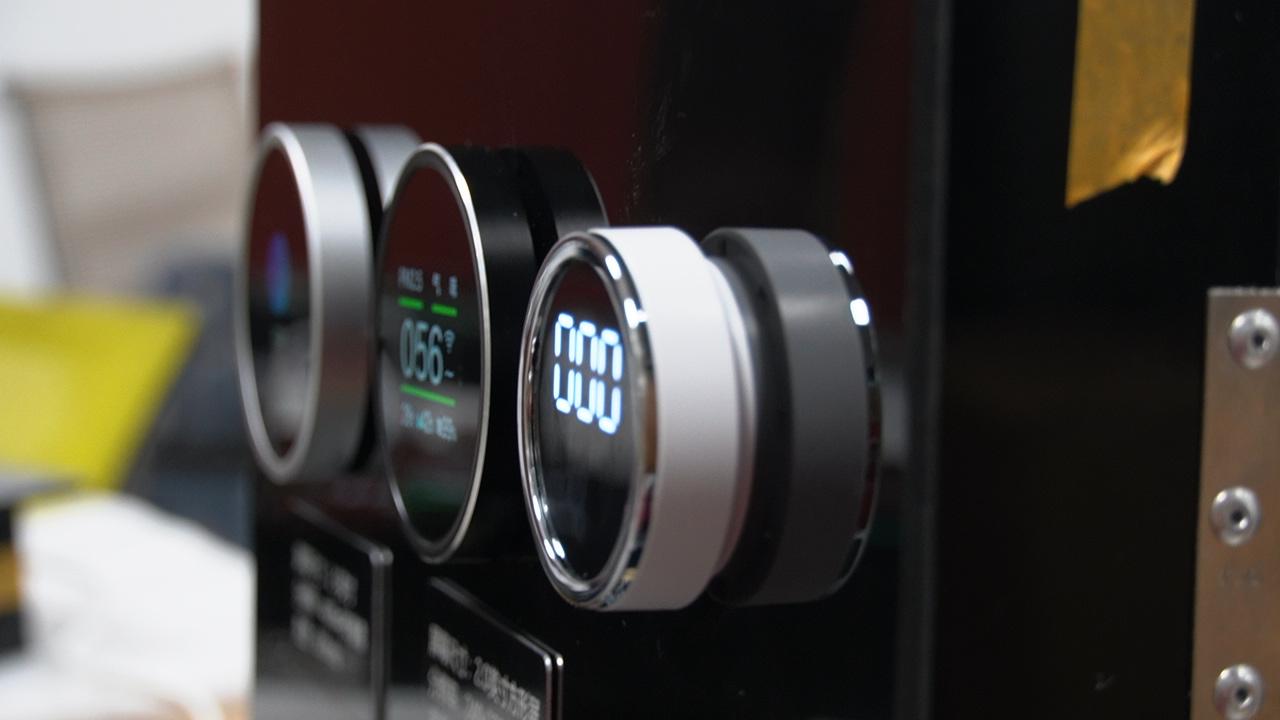
 

rotary knob display


The Evolution of Appliance Control: From Analog to Intelligent

The simple rotary knob is a classic interface that users have trusted for generations. Its tactile, intuitive nature is irreplaceable. At Golden Vision, we asked a question: "How can we preserve this intuitive physical interaction while adding the power of digital intelligence?"

The answer is our rotary knob with display. This hybrid interface combines a high-precision encoding knob with a vibrant, integrated TFT or OLED screen. It allows users to scroll through menus, adjust settings, and see real-time feedback through a single, elegant component. It’s the perfect fusion of tactile satisfaction and digital clarity.

Why the Rotary Knob with Display is Dominating Smart Appliance Design


1. Unmatched Intuitive Usability

In a world of complex touchscreen menus, the physical knob is a welcome respite. It offers:


Tactile Feedback: Users can make adjustments by feel, without staring at the interface.


Muscle Memory: Turning a dial is a natural, learned behavior, making it accessible for all users.


Contextual Control: The knob's function adapts dynamically. In an oven, it controls temperature; in a washer, it selects cycles, with the display always showing relevant data.


2. A Premium and Streamlined Aesthetic

Our knob screens help appliance designers create clean, minimalist, and high-end control panels. By replacing multiple buttons and a separate screen, it consolidates functionality into a single, sophisticated centerpiece that elevates the entire product's design language.


3. Enhanced Safety and Hygiene

Glove-Friendly Operation: Unlike capacitive touchscreens, our knob screens can be operated with wet hands or while wearing oven mitts—a critical safety feature in kitchens.

Reduced Contamination: The reduced need to touch a large screen minimizes smudges, fingerprints, and the spread of germs, supporting easier cleaning and maintenance.


4. The Perfect Bridge for the Smart Home

This interface seamlessly connects the physical and digital worlds of your appliance. The knob provides the satisfying physical interaction, while the digital display connects the user to smart features, showing:


Wi-Fi connectivity status

Notifications for completed cycles

Step-by-step recipe guides from a connected app


Golden Vision Knob Screens in Action: Smart Appliance Scenarios

Our rotary knob with display components are engineered to excel in specific, high-value applications:

Smart Ovens and Ranges: Imagine turning the knob to scroll through digital recipes. The integrated display shows a picture of the dish, the preheat temperature, and the timer—all from one central, intuitive control. Our robust components, built for high-temperature environments, ensure longevity and reliability.


Washing Machines and Dryers: Users can effortlessly scroll through dozens of specialized cycles. The display instantly updates to show duration, spin speed, and temperature for each selection. With a lifespan designed for thousands of cycles, Golden Vision knob screens are built to last.


Induction Cooktops: A single, elegant knob can control power levels for a specific burner, with the display showing the exact wattage or temperature setting, providing precise culinary control.


Dishwashers and Coffee Makers: Select wash cycles or brew settings with tactile confidence, while the display provides clear confirmation and status updates, like remaining time or current cycle stage.

Why Partner with Golden Vision? Our Legacy of Reliability Since 1995

Choosing a component supplier is about more than just the product; it's about the partnership. When you partner with Golden Vision, you gain the advantage of nearly 30 years of experience.

Proven Expertise: Since 1995, we have refined our manufacturing processes and quality control to deliver components you can rely on for your most demanding projects.


Customization and Support: We work closely with our clients to develop custom rotary knob with display solutions that meet their exact aesthetic, functional, and branding requirements.


Quality You Can Trust: Our commitment to using high-grade materials and rigorous testing protocols ensures that every knob screen we produce meets our legacy of reliability, helping you build appliances that stand the test of time.

Conclusion: Build a Smarter, More Intuitive Future with Us

The rotary knob with display is more than a trend; it's the future of intuitive appliance control. It reduces complexity, enhances safety, and delivers a premium user experience that truly makes a smart appliance feel intelligent and easy to use.

As a reliable knob screen manufacturer since 1995, Golden Vision has the experience, technical expertise, and commitment to quality to be your trusted partner in bringing this exceptional technology to market.

Ready to integrate a reliable, intuitive interface into your next-generation appliances? [Contact Golden Vision today to discuss your project and request a sample]. 


In the world of electronics design, creating a compelling user interface is crucial. However, integrating a high-quality display can often be complex, requiring significant processor power and software expertise. This is where the TFT Serial Port Display comes in—a powerful yet surprisingly simple solution for adding brilliant visuals to any project.

If you're looking for an efficient way to upgrade from a basic monochrome screen to a full-color graphical interface without a major system overhaul, you've found the right technology.


The Core Concept: Simplifying the Complex


At its heart, a TFT Serial Port LCD Display is a smart, self-contained module. It combines a full-color Thin-Film Transistor (TFT) LCD with its own dedicated graphics controller. The "Serial Port" in the name, typically referring to a UART (Universal Asynchronous Receiver/Transmitter) interface, is the key to its simplicity.

Instead of sending a constant stream of raw pixel data (which requires high-speed parallel interfaces and significant CPU resources), your main microcontroller only needs to send simple text and graphics commands over a basic serial connection.

Think of it like this: You're not painstakingly painting each pixel yourself. Instead, you're giving a skilled assistant (the display's controller) high-level instructions like, "draw a blue button at these coordinates," or "show the text 'Temperature: 25°C' in this font." The assistant handles all the complex work.


How Does a TFT UART Display Work?


The process is straightforward and greatly reduces the development burden on your primary system:

  1. Integration: You connect the display to your host microcontroller (like an Arduino, STM32, or PIC) using just a few wires—typically Transmit (TX), Receive (RX), Power, and Ground.

  2. Communication: Your microcontroller sends pre-defined commands from a simple command set over the serial interface TFT. These commands are packaged in a specific protocol (often vendor-specific, like using the "XYZ" command set from Goldenvision).

  3. Rendering: The display's onboard controller receives these commands and executes them. It processes the instructions to draw shapes, display images, or print text directly onto the TFT screen.

This architecture makes the TFT UART display an ideal industrial display, where reliability and simplicity are paramount, and the host PLC (Programmable Logic Controller) or industrial computer may not be built for high-speed graphics processing.


Key Advantages of Using a Serial Interface TFT


Why would a designer choose this type of display? The benefits are significant:

  • Dramatically Reduced MCU Load: Frees up your main processor for core application tasks, as it no longer has to manage the graphics frame buffer.

  • Faster Development Time: Simplifies software development. You don't need to write complex graphics drivers; you just need to send serial strings.

  • Easy Upgrade Path: It's often the simplest way to replace a character-based LCD or a monochrome graphic display with a full-color TFT without changing your main board design.

  • Cost-Effective: Lowers overall system cost by allowing you to use a lower-performance, less expensive microcontroller.


Ideal Applications for Serial Port Displays


The combination of a rich graphical TFT and a simple serial interface makes these displays exceptionally versatile, especially in industrial and embedded settings:

  • Industrial Control Panels (HMI): For operating and monitoring machinery, PLCs, and CNC systems.

  • Medical Devices: For user interfaces on diagnostic equipment, patient monitors, and infusion pumps.

  • Test and Measurement Equipment: Providing a clear visual representation of data, graphs, and settings.

  • Smart Home Controllers: For thermostats, security systems, and automation hubs.

  • Point-of-Sale (POS) Terminals: Displaying transaction information and user menus.


Conclusion: The Smart Choice for Embedded Graphics


TFT Serial Port Display offers the perfect balance between visual sophistication and engineering simplicity. It empowers designers to create modern, user-friendly interfaces without the traditional complexity and cost associated with high-resolution TFT integration.

For anyone designing an industrial display or an embedded system that needs to make the leap from basic to brilliant, the serial TFT is the most practical and efficient path forward.


Ready to Simplify Your Design with a Serial TFT?

At Gvlcd, with our 30 years of display manufacturing expertise, we provide robust and high-quality TFT UART displays that are easy to integrate and built to last. Explore our range of serial port display solutions and see how we can help you bring your product interface to life.


In today's competitive electronics landscape, the choice of your display supplier is more than a simple component purchase—it's a strategic partnership that can determine the success, reliability, and longevity of your product. While new suppliers may offer attractive prices, they cannot replicate the profound value of decades of accumulated knowledge and refined processes. So, why is partnering with an experienced LCD partner like Goldenvision a critical business decision?

The answer lies in moving beyond transactional relationships to a partnership built on trust, resilience, and shared success. Here is the Goldenvision Advantage.


1. Unmatched Product Reliability and Quality Control

A reliable lcd display supplier is defined by its consistency. With 30 years of experience, Goldenvision has institutionalized quality.

  • Refined Manufacturing: Our production processes have been optimized over thousands of projects, leading to exceptionally high yields and minimal defect rates.

  • Rigorous Testing Protocols: Every display batch undergoes stringent testing for performance under temperature extremes, vibration, longevity, and visual quality. We catch failures so you don't have to.

  • Proven Component Sourcing: Our long-term relationships with raw material suppliers ensure we use only high-grade glass, ICs, and backlights, guaranteeing the durability of your end product.

This relentless focus on quality mitigates your risk, reduces costly field failures, and protects your brand's reputation.


2. Deep Engineering Support & Collaborative Problem-Solving

An experienced LCD partner provides more than just a product datasheet; they provide intellectual capital.

  • Application Expertise: Our engineers have likely already solved the challenge you're facing. We offer invaluable guidance on integration, overcoming EMI issues, optimizing power consumption, and selecting the right interface for your application.

  • Customization Capabilities: Need a specific size, connector, optical bonding, or brightness level? We have the technical depth to tailor a solution that fits your exact requirements, accelerating your time-to-market.

  • Proactive Partnership: We don't just take orders; we collaborate. We act as an extension of your R&D team, suggesting improvements and anticipating potential design hurdles before they become problems.


3. Supply Chain Stability and Long-Term Commitment

In an era of global disruptions, a long-term LCD partner provides the stability your production line depends on.

  • Risk Mitigation: Our established and diversified supply chain is resilient against market fluctuations and component shortages. We have the purchasing power and relationships to secure critical materials.

  • Lifecycle Management: We understand the need for component consistency. We commit to long-term product availability and provide transparent lifecycle planning, preventing the nightmare of last-minute redesigns due to display end-of-life.

  • Predictable Logistics: Our experienced logistics team ensures on-time delivery, keeping your production schedule on track and your customers happy.


4. The Value of a Long-Term LCD Partner

Choosing Goldenvision is an investment in a relationship that grows over time. As a long-term LCD partner, we offer:

  • Strategic Insight: We help you navigate the evolving display technology landscape, advising on future trends like knob screens or advanced TFT interfaces that can give your product a competitive edge.

  • Continuous Improvement: Feedback from decades of partnerships is fed back into our R&D and processes, meaning the components you receive tomorrow are even better than those you use today.

  • Trust and Transparency: We build our relationships on open communication and proven performance. You get a supplier you can rely on, project after project, year after year.


Conclusion: Experience is Your Competitive Edge

The cheapest component is often the most expensive one over the full product lifecycle. By partnering with Goldenvision, you are not just buying an LCD; you are securing a foundation of quality, a reservoir of expertise, and a commitment to your success.

You gain a partner dedicated to ensuring your products are reliable, your time-to-market is fast, and your roadmap is secure.


Ready to experience the Goldenvision Advantage?


In the high-stakes world of healthcare, every component of a medical device must meet the highest standards of performance, reliability, and safety. At the core of many of these devices—from patient monitors to surgical instruments—lies a critical interface: the medical TFT LCD display.


These are not your average screens. Medical-grade TFT (Thin-Film Transistor) LCDs are engineered specifically to support clinical decisions, enhance patient care, and withstand the demanding hospital environment. Let's explore the key advantages that make them indispensable in modern medicine.


1. Uncompromising Image Quality and Clarity

Accurate diagnosis and treatment depend on visual precision. Medical TFT LCDs deliver:


High Resolution and Pixel Density: They provide sharp, detailed images crucial for interpreting X-rays, MRI scans, and CT scans, where missing a minute detail can have significant consequences.


Excellent Color Accuracy and Consistency: Medical displays offer superior grayscale performance and color fidelity. This is vital for distinguishing subtle tissue variations in ultrasound or digital pathology. Unlike consumer panels, they are calibrated to maintain this accuracy over time.


High Brightness: With brightness levels often exceeding 500 to 1000 nits, these displays remain clearly visible in various lighting conditions, including brightly lit operating rooms.


2. Superior Reliability and Longevity

Medical devices are often in continuous operation. Downtime is not an option.


Extended Lifespan: While consumer displays may last 10,000 hours, medical-grade TFT LCDs are built for 24/7 use, with backlights rated for 50,000 to 100,000 hours or more. This ensures years of reliable service without failure.


Robust Construction: They use high-quality components and reinforced designs to resist the wear and tear of a clinical environment, including potential bumps and vibrations.


3. Designed for Demanding Environments

Hospitals and clinics are unique workplaces. Medical TFTs are built to handle their challenges.


Wide Operating Temperature Range: They perform flawlessly in cold storage rooms or warm operating theaters, with a typical range of -10°C to 60°C or wider.


Durability and Safety: Many medical TFTs feature optical bonding. This process laminates the cover glass directly to the LCD, which:


Reduces glare and reflections.


Enhances contrast and sunlight readability.


Makes the screen more durable and resistant to condensation, a critical feature in sterile environments.


4. Enhanced Hygiene and Infection Control

Infection control is paramount in healthcare settings.


Sealed Design: Medical TFT displays are designed with flat, seamless fronts that eliminate gaps where dirt, fluids, and bacteria can accumulate.


Chemical Resistance: The cover glass is engineered to withstand frequent cleaning with harsh disinfectants and cleaning agents without degrading or clouding.


5. Critical Compliance and Safety Standards

Consumer displays do not meet the rigorous requirements for medical equipment. Medical TFT LCDs are specifically designed and certified to comply with international standards, such as:


IEC 60601-1: The benchmark for safety and essential performance of medical electrical equipment.


EMI/EMC Shielding: They are engineered to minimize electromagnetic interference, ensuring they do not disrupt other sensitive life-saving equipment in the vicinity.


Key Application Scenarios for Medical TFT LCD Displays

The advantages of these displays shine across the entire healthcare spectrum:


Patient Monitoring Systems: Vital for displaying real-time, clear, and unambiguous patient data (heart rate, blood pressure, SpO2) at the nurse's station or bedside.


Diagnostic Imaging Displays: The gold standard for PACS (Picture Archiving and Communication System) workstations, radiologists rely on their precision for mammography, radiography, and other imaging modalities.


Surgical and Intervention Tools: Used in surgical displays, anesthesia workstations, and minimally invasive surgical systems, providing surgeons with a true-to-life view of the procedure.


Medical Carts and Point-of-Care Devices: Their durability and clear visibility make them ideal for mobile ultrasound systems and portable diagnostic devices that are wheeled between rooms.


Veterinary and Dental Equipment: Bringing the same benefits of clarity and reliability to animal healthcare and dental practices.


Conclusion: More Than Just a Screen

A medical TFT LCD display is a mission-critical component. It is the vital link between complex medical data and the clinician who uses it to make life-saving decisions. By offering unparalleled image quality, rugged reliability, and compliance with strict safety standards, these specialized displays are not just an advantage—they are a fundamental requirement for advancing modern patient care.


Are you designing or sourcing components for a medical device? Partner with a supplier who understands the critical nature of these components. [Contact Gvlcd today to find the right medical-grade display for your application]. 


Meta Description: Struggling to find the best TFT LCD display for your project? Our expert guide walks you through key specs like size, resolution, interface, and brightness to ensure you make the perfect choice.


Selecting the ideal TFT LCD display is a critical step in the success of your electronic product. With so many options available, finding the best TFT LCD display for your project can feel overwhelming. The wrong choice can lead to increased costs, development delays, and a poor user experience.


At Gvlcd, with our extensive experience as a leading LCD screen manufacturer, we’ve created this definitive guide to simplify the selection process. We will walk you through the essential technical parameters you need to consider to make an informed and confident decision.


1. Define Your Application and Environment

Before diving into specifications, start with the basics. The end-use of your product dictates the display's requirements.


Industrial Equipment: Requires high brightness, wide temperature range, and long-term reliability.


Medical Devices: Demands high contrast, accurate color reproduction, and often sterilization compatibility.


Consumer Electronics (Smart Home, Wearables): Prioritizes slim design, low power consumption, and attractive aesthetics.


Automotive: Needs high brightness for sunlight readability, wide viewing angles, and robust operation across varying temperatures.


Outdoor Kiosks: Must have very high brightness and an optional touch panel that works in all weather conditions.


2. Key Technical Specifications to Consider

Once you know your application, it's time to evaluate the core specs that define a TFT LCD's performance.


A. Screen Size and Aspect Ratio

The physical size (measured diagonally) and the ratio of width to height (e.g., 16:9, 4:3) must fit your product's mechanical design. Ensure there is adequate bezel space for mounting.


B. Resolution and Pixel Density

Resolution (e.g., 800x480, 1920x1080) determines the sharpness of the image. Higher resolution displays show more detail but may require a more powerful processor to drive them. For the best TFT LCD display for project clarity, match the resolution to the viewing distance.


C. Brightness (Nits)

Brightness is measured in nits (cd/m²). This is crucial for readability.


Indoor use: 250-500 nits is typically sufficient.


Sunlight-readable applications: 800 nits to over 1500 nits are necessary.


D. Viewing Angle (IPS vs. TN)

The technology of the LCD panel affects how the image looks when viewed from an angle.


IPS (In-Plane Switching): Offers superior color accuracy and wide viewing angles (178/178 degrees). This is the best TFT LCD display choice for applications where the screen may be viewed from the side.


TN (Twisted Nematic): Offers faster response times but poorer viewing angles and color shift. Suitable for simple, direct-view applications where cost is a primary concern.


E. Interface: Connecting to Your Mainboard

This is a critical decision. The interface is how the display connects to your processor.


LVDS (Low-Voltage Differential Signaling): A mature, robust standard ideal for longer cables and higher resolutions. Common in industrial and automotive applications.


RGB/MCU Interface: Often used with simpler microcontrollers.


MIPI DSI (Mobile Industry Processor Interface): A high-speed, serial interface common in smartphones and modern compact devices. It uses fewer pins and is power-efficient.


HDMI/DP: Standard for video input, common in consumer entertainment products.


Choosing the right interface compatible with your mainboard is essential to avoid costly redesigns.


F. Touchscreen Option (Resistive vs. Capacitive)

If user interaction is needed, you'll need a touch panel.


Resistive Touch: Can be activated with any object (stylus, glove). Less sensitive but more durable in harsh environments.


Capacitive Touch: Offers multi-touch capability and a superior, glass-like feel. It requires a finger or capacitive stylus and is the standard for modern consumer devices.


3. Additional Critical Factors

Operating Temperature Range: Ensure the display is rated for the coldest and hottest environments your product will face.


Longevity and Supply: For products with long lifecycles, choose a display manufacturer like Jin Shijie that guarantees stable, long-term supply and component consistency.


Customization: Standard modules may not always fit. Look for a supplier that offers customization services for the best TFT LCD display tailored to your project, including cover glass, bonding, and unique sizes.


When integrating a TFT LCD display into your product, one of the most critical decisions is choosing between an industrial-grade and a consumer-grade panel. While they may look similar at a glance, the differences under the surface are profound and can make or break your application.
 
 
Selecting the wrong type can lead to premature failure, unreliable performance, and ultimately, a damaged reputation. This guide will demystify the key differences between industrial vs. consumer TFT LCD displays, helping you make an informed choice.
 
 
What is a Consumer Grade TFT LCD?
 
Consumer-grade TFT LCDs are designed for mass-market electronics where cost is a primary driver. You find them in everyday devices like:
 
Smartphones and Tablets
 
Consumer Televisions
 
Home Appliances
 
Standard Computer Monitors
 
 
These displays are engineered to perform well under typical home or office conditions. Their focus is on delivering vibrant colors and high resolutions at the lowest possible price point.
 
 
What is an Industrial Grade TFT LCD?
 
Industrial-grade TFT LCDs are built for reliability, durability, and longevity in challenging environments. They are the workhorses of critical applications in:
 
Industrial Automation and HMI (Human-Machine Interface)
 
Medical Devices and Diagnostic Equipment
 
Transportation (Marine, Aviation, Automotive)
 
Outdoor Kiosks and Digital Signage
 
Military and Aerospace Systems
 
 
They prioritize consistent performance over extreme temperatures, vibration, and continuous operation.
 
 
Head-to-Head: Key Differences Between Industrial and Consumer TFT LCDs
 
Let's break down the comparison across the most important technical and operational parameters.
 
 
1. Operating Temperature Range
Consumer Grade: Typically has a narrow operating temperature range, usually around 0°C to 50°C (32°F to 122°F). These displays can malfunction or suffer permanent damage if used outside this range.
 
Industrial Grade: Built to withstand extreme temperatures, with a wide operating range often from -30°C to 80°C (-22°F to 176°F) or even wider. Special components and bonding processes prevent the liquid crystal from freezing or boiling.
 
 
2. Lifespan and Backlight Longevity
Consumer Grade: Designed for a shorter product lifecycle. The LED backlight system typically has a lifespan of 10,000 to 30,000 hours. They are not intended for 24/7 operation.
 
Industrial Grade: Engineered for extended, continuous use. Industrial displays often feature high-grade LED backlights rated for 50,000 to 100,000 hours or more. This makes them ideal for systems that must run constantly for years.
 
 
3. Durability and Build Quality
Consumer Grade: Uses standard PCBs and components. They are more susceptible to damage from vibration, shock, and humidity.
 
Industrial Grade: Features a robust construction. This includes:
 
Strengthened Glass: Often uses chemically or thermally tempered glass to resist impact and scratching.
 
Robust PCBs: Thicker copper layers and higher-quality laminates.
 
Superior Bonding: Optical bonding, which laminates the touch panel directly to the LCD, eliminates an air gap. This reduces glare, improves readability in sunlight, and prevents internal condensation.
 
 
4. Performance & Consistency
Consumer Grade: Performance can vary between batches. Brightness (nits) is sufficient for indoors but often inadequate for sunlight readability.
 
Industrial Grade: Offers strict performance consistency and higher specifications. They boast much higher brightness levels (500 to 2500+ nits) for outdoor viewability and are designed to deliver stable performance with minimal color shift over their entire lifespan.
 
 
5. Cost and Value
Consumer Grade: Lower initial cost. This is the main advantage, making them attractive for high-volume, cost-sensitive projects.
 
Industrial Grade: Higher initial investment. However, this translates to a lower Total Cost of Ownership (TCO) for demanding applications due to their superior reliability, longer lifespan, and reduced downtime and maintenance costs.
 
 
Which One Should You Choose? A Quick Guide
 
Choose a Consumer Grade TFT LCD if:
 
 
Your product is for indoor, consumer use.
 
 
Cost is the most critical factor.
 
 
The operating environment is stable and mild.
 
 
The device will not be used 24/7.
 
 
Choose an Industrial Grade TFT LCD if:
 
 
Your application is for medical, industrial, automotive, or outdoor use.
 
 
Reliability and uptime are non-negotiable.
 
 
The display will face extreme temperatures, vibration, or moisture.
 

You require a long product lifecycle and sunlight readability.


The choice between an industrial-grade and consumer-grade TFT LCD is not about which one is "better," but about which one is right for your specific application. While consumer-grade panels offer an attractive price point, the robust engineering of industrial-grade displays provides the reliability and durability necessary for mission-critical systems. Investing in the correct grade from the start ensures product integrity, user satisfaction, and long-term success.


Looking for a reliable partner for your industrial display needs? [Contact Our Experts Today!


The wearable technology market is booming. From smartwatches that keep us connected to fitness trackers that monitor our health, these devices have become integral to our daily lives. At the heart of every successful wearable is a critical component: the display. For manufacturers, selecting the right small TFT LCD display is paramount to creating a device that is functional, durable, and user-friendly.


At Gvlcd, we specialize in manufacturing high-performance, ultra-compact TFT LCDs designed specifically for the rigorous demands of wearable technology. This article explores why small TFT LCDs are the perfect fit for this innovative market and what to look for when choosing one.


Why Small TFT LCDs Dominate the Wearable Market

While other display technologies exist, TFT (Thin-Film Transistor) LCDs offer a unique combination of benefits that make them exceptionally well-suited for wearables:


Excellent Image Quality: TFT technology provides vibrant colors, high contrast, and sharp resolution, ensuring that information, notifications, and health data are clear and easy to read at a glance.


Proven Cost-Effectiveness: As a mature technology, TFT LCDs offer a fantastic balance of performance and cost, which is crucial for mass-market consumer products.


High Customization Flexibility: Manufacturers can choose from a wide range of sizes, resolutions, shapes (round, square, rectangular), and interface options to create a truly unique product design.


Key Features to Look for in a Wearable TFT LCD

Not all small displays are created equal. When sourcing a small TFT LCD display for smartwatches, fitness bands, or other wearables, prioritize these essential features:


1. Ultra-Low Power Consumption & Sunlight Readability

This is the most critical trade-off. Wearables have tiny batteries, so efficiency is key.


High Brightness: Displays need to be readable in direct sunlight, often requiring 500 to 1000 nits. However, higher brightness consumes more power.


The Solution: Look for displays with high brightness efficiency and features like PWM (Pulse-Width Modulation) dimming, which allows the backlight to be precisely controlled to save power while maintaining readability. Transflective LCDs are an excellent option for outdoor-focused wearables, as they use ambient light to enhance visibility while drastically reducing power needs.


2. Rugged and Durable Construction

Wearables live on our bodies and are subjected to daily bumps, moisture, and temperature changes.


Strong Cover Glass: The display must be protected by durable cover glass, such as chemically strengthened glass.


Optical Bonding: This process laminates the touch panel directly to the LCD, reducing internal reflection (which improves sunlight readability) and making the display stack more robust against impact and moisture ingress.


3. Advanced Touch Capabilities

User interaction on a small screen must be precise and reliable.


Capacitive Touch: Is the standard for modern wearables. It supports multi-touch gestures (like pinch-to-zoom on maps) and offers a smooth, glass-like feel.


Glove/Wet Touch: Advanced touch controllers can function even when the screen is wet from rain or sweat, a vital feature for fitness trackers.


4. Compact Form Factor and Flexible Connections

Space is incredibly limited inside a wearable device.


Slim Border Design: Displays with very narrow bezels (the frame around the screen) allow for a larger screen-to-body ratio, maximizing the display area without increasing the device's overall size.


FPC (Flexible Printed Circuit) Connectors: A thin and flexible FPC cable is essential for routing the connection within the tight confines of a wearable device's case.


Goldenvision: Your Partner for Wearable Display Solutions

As a leading small TFT LCD display manufacturer, Goldenvision understands the unique challenges of the wearable market. We don't just sell standard modules; we provide tailored solutions.


Custom Shapes and Sizes: We can produce round, oval, and other non-rectangular displays to match your innovative design.


Full Integration Services: We offer optical bonding, touch panel integration, and custom driver board design to deliver a fully tested, plug-and-play display module.


Long-Term Support: We commit to stable product lifecycles and reliable supply chains, ensuring your product can remain in production for years.


Hello and welcome to the Gvlcd blog, your trusted resource for insights into TFT LCD technology. As a leading manufacturer of high-quality LCD displays, we often get asked a fundamental question: "What screen resolution do I need for my application?"


Understanding TFT LCD display resolution is crucial for selecting the right panel. It directly impacts the clarity, sharpness, and amount of information you can fit on the screen. In this article, we’ll break down common resolution standards, from the classic QVGA to stunning 4K, and guide you on how to choose the perfect one for your project.


What Exactly is TFT LCD Display Resolution?

Simply put, resolution refers to the number of distinct pixels that make up the display image. It is expressed as (number of horizontal pixels) x (number of vertical pixels). A higher resolution means more pixels are packed into the same screen size, resulting in a sharper, more detailed image with less visible "pixelation."


For TFT (Thin-Film Transistor) LCDs, each pixel is made up of three sub-pixels (red, green, and blue) controlled by its own transistor, allowing for precise control, faster response times, and superior image quality compared to older LCD technologies.


A Guide to Common Resolution Standards

Here’s a overview of the most common TFT LCD resolutions you will encounter.


1. QVGA (Quarter Video Graphics Array)

Resolution: 320 x 240 pixels


Aspect Ratio: 4:3


Usage: Once the standard for early mobile devices and handheld equipment, QVGA is now primarily used in low-cost, low-power industrial applications, simple consumer electronics, and secondary status displays where high detail is not required.


2. HVGA (Half-size VGA)

Resolution: 480 x 320 pixels


Aspect Ratio: 3:2


Usage: served as a stepping stone between QVGA and VGA, famously used in earlier smartphones like the first-generation iPhone. Its use has declined but can still be found in some specific industrial and medical devices.


3. VGA (Video Graphics Array)

Resolution: 640 x 480 pixels


Aspect Ratio: 4:3


Usage: A historical benchmark for PC graphics. While considered low-resolution by today's standards, VGA interfaces are still widely supported in industrial, medical, and embedded systems due to their simplicity and universal compatibility.


4. SVGA (Super Video Graphics Array)

Resolution: 800 x 600 pixels


Aspect Ratio: 4:3


Usage: Offers a noticeable improvement over VGA. SVGA is commonly found in human-machine interface (HMI) panels for industrial machinery, point-of-sale (POS) systems, and some medical monitoring devices.


5. XGA (Extended Graphics Array)

Resolution: 1024 x 768 pixels


Aspect Ratio: 4:3


Usage: For many years, this was the standard resolution for desktop monitors and laptops. It remains a very popular resolution for industrial and medical applications where a 4:3 aspect ratio is ideal for displaying data and traditional software interfaces.


6. WXGA (Widescreen Extended Graphics Array)

Resolution: 1280 x 800 pixels


Aspect Ratio: 16:10 (Widescreen)


Usage: This widescreen format marked the shift to broader displays. It is extremely common in modern industrial touch panels, portable devices, and consumer laptops, offering more horizontal space for navigation and data visualization.


7. HD / 720p (High Definition)

Resolution: 1280 x 720 pixels


Aspect Ratio: 16:9


Usage: The entry-level for HD video. HD resolution is used in smaller digital signage, automotive displays, and various multimedia devices where clear video playback is a key requirement.


8. Full HD / 1080p (FHD)

Resolution: 1920 x 1080 pixels


Aspect Ratio: 16:9


Usage: The current benchmark for high-definition content. Full HD is ubiquitous in consumer televisions, monitors, and high-end industrial displays used for detailed graphics, complex HMIs, and premium digital signage.


9. 4K UHD (Ultra High Definition)

Resolution: 3840 x 2160 pixels


Aspect Ratio: 16:9


Usage: Representing the cutting edge of clarity with over 8 million pixels, 4K delivers breathtaking detail. Its applications are growing rapidly in high-end digital signage (e.g., video walls), professional medical imaging, detailed CAD/CAM designs, and luxury entertainment systems.


How to Choose the Right Resolution for Your Application

Selecting the optimal resolution is a balance between technical requirements and cost. Here are key factors to consider at GoldenScope:


Content and Purpose: What will be displayed?


Text & Simple Graphics: Lower resolutions like SVGA or XGA may be sufficient and cost-effective.


Detailed Graphics & HMIs: WXGA or Full HD provides the necessary clarity and screen real estate.


High-Resolution Imagery & Video: 4K UHD is essential for medical imaging, video production, and premium advertising.


Screen Size: A higher resolution is necessary on a larger screen to maintain a high PPI (Pixels Per Inch) value and avoid a grainy, pixelated image. A 7-inch screen with XGA resolution will look very sharp, while a 20-inch screen with the same resolution will look poor.


Viewing Distance: Will users be close to the screen (e.g., a smartphone) or far away (e.g., a highway billboard)? The farther the viewing distance, the lower the required PPI and resolution can be.


System Compatibility & Cost: Higher resolution displays require more powerful processors and graphics controllers to drive all those pixels, which increases system cost and power consumption. Ensure your hardware can support your chosen resolution.


Interface Compatibility: Verify that your system's video output (e.g., LVDS, eDP, HDMI) supports the desired resolution.


Conclusion

From the basic clarity of QVGA to the immersive detail of 4K, understanding TFT LCD display resolution is key to building a successful product. There is no one-size-fits-all answer; the best choice depends entirely on your specific application, user experience goals, and technical constraints.


At Goldenvision, we help our clients navigate these choices every day. We offer a wide range of TFT LCD modules in various resolutions, sizes, and configurations to meet your precise needs.


Ready to find the perfect display for your project? [Contact our technical experts today] for a personalized consultation and let Goldenvision bring your vision to life with clarity and precision.

Welcome to the Gvlcd blog, where we illuminate the world of LCD technology. As a leading TFT LCD manufacturer, we know that integrating a touch screen is a critical decision that defines the user experience of any device. Two technologies dominate the market: Capacitive and Resistive.


Choosing the right one is essential for performance, durability, and cost. This article will break down the differences between capacitive and resistive touchscreen TFT LCDs to help you make the perfect choice for your application.


How Does a Touch Screen Work with a TFT LCD?

A touch screen is a transparent panel placed over a TFT LCD display. It detects the presence and location of a touch within the display area. This signal is then sent to the controller and processed, allowing the user to interact directly with what is shown on the screen.


Resistive Touch Technology: The Durable Workhorse

A resistive touchscreen is a passive technology consisting of two flexible, transparent layers separated by a small air gap. The inside surfaces are coated with a resistive material (like ITO).


How it Works: When you press the screen, the two layers make contact at the precise point of touch. The controller detects this change in electrical current and calculates the (X,Y) coordinates.


Activation Method: Pressure from a finger, gloved hand, stylus, or any object.


Key Advantages:


Cost-Effective: Generally less expensive to manufacture.


High Durability: Resistant to surface contaminants like dust, water, and moisture.


Input Flexibility: Can be operated with any object—ideal for environments where users wear gloves.


High Accuracy: Well-suited for precise input with a stylus.


Considerations:


Lower Clarity: The multiple layers can reduce optical clarity and brightness by up to 25%.


Less Durable: The flexible top layer can be scratched or punctured by sharp objects.


No Multi-Touch: Standard resistive screens typically only register single-touch input.


Capacitive Touch Technology: The Modern Standard

A capacitive touchscreen is an active technology. It features a glass panel coated with a transparent conductive material (like ITO).


How it Works: It holds an electrostatic charge. When a conductive object (like a human finger) touches the screen, it draws a minute amount of current, creating a voltage drop. The controller measures this change from each corner of the screen to pinpoint the touch location.


Activation Method: Requires the electrical conductivity of a bare finger or a specialized capacitive stylus.


Key Advantages:


Superior Clarity: Offers excellent optical transparency and brightness (>90%), resulting in a sharper image.


Enhanced Durability: The glass surface is highly scratch-resistant and durable.


Multi-Touch Support: Native support for modern gestures like pinch-to-zoom, swipe, and rotate.


Excellent Touch Feel: Provides a very smooth, responsive user experience.


Considerations:


Higher Cost: More complex technology leads to a higher price point.


Glove Limitations: Cannot be operated with a standard glove or a non-conductive stylus.


Sensitivity to EMI: Can be susceptible to electromagnetic interference in harsh environments.


Feature

Resistive Touch

Capacitive Touch

Touch Activation

Pressure

Electrical Conductivity

Input Method

Finger (gloved/bare), Stylus, Any object

Bare finger, Capacitive stylus

Multi-Touch

No (Typically single-touch)

Yes (Native support)

Optical Clarity

Lower (~75-80% light transmission)

Higher (>90% light transmission)

Durability

Good (Scratch-prone surface)

Excellent (Hard glass surface)

Cost

Lower

Higher

Resistance to

Liquids, Dust, Contaminants

Scratches, Wear

Ideal For

Industrial controls, Medical devices, POS systems, Rugged environments

Smartphones, Tablets, Consumer electronics, Interactive kiosks


How to Choose: Which One is Right for Your Project?

The best choice depends entirely on your application's specific needs and environment.


Choose a Resistive Touch TFT LCD if:


Your users will be wearing gloves (e.g., factory workers, medical staff).


You need to use a stylus for precise input (e.g., signature capture, industrial menu navigation).


The operating environment has high levels of dust, moisture, or other contaminants.


Your project has a strict budget constraint.


Multi-touch functionality is not a requirement.


Choose a Capacitive Touch TFT LCD if:


You are designing a consumer-facing product where a premium look and feel are critical.


Your interface requires multi-touch gestures (pinch, zoom, swipe).


Image clarity, brightness, and color vibrancy are top priorities.


The primary input will be from a bare finger.


You require a highly durable, scratch-resistant glass surface.


Conclusion: Partner with the Right Expert

Both resistive and capacitive technologies have their rightful place in the world of TFT LCD displays. Understanding their core differences is the first step to a successful product design.


At Goldenvision, we don't just supply displays; we provide solutions. Our technical experts can guide you through this selection process, helping you choose the perfect touch technology for your specific application, whether it's a rugged industrial HMI or a sleek consumer interface.


When selecting alumina ceramic materials for industrial applications, manufacturers often face one key decision — should you choose 95% alumina ceramic or 99% alumina ceramic?
Both materials offer excellent mechanical strength, corrosion resistance, and thermal stability. However, their performance, cost, and ideal use cases vary significantly.

Alumina (Al₂O₃) is one of the most widely used advanced ceramics in industrial applications. Its excellent hardness, dielectric strength, and wear resistance make it ideal for electrical, mechanical, and chemical equipment.
The purity level of alumina—95%, 96%, 99%, or higher—greatly affects its mechanical and thermal performance.

95% Alumina Ceramic contains small amounts of impurities and additives (such as SiO₂ or MgO) to improve sintering efficiency and reduce production costs.

99% Alumina Ceramic, on the other hand, offers ultra-high purity and density, providing superior insulation and strength for demanding environments.


Property 95% Alumina 99% Alumina
Al₂O₃ Content ≥95% ≥99%
Density (g/cm³) 3.7–3.8 3.9+
Flexural Strength (MPa) 250–300 320–380
Hardness (HV) 1500 1800
Maximum Working Temperature (°C) ~1500°C ~1700°C
Electrical Insulation (Ω·cm) 10¹² 10¹⁴
Thermal Conductivity (W/m·K) 20–25 30+
Cost Lower Higher


1. Choose 95% alumina when you need a balance between performance and cost. It’s commonly used in:


Because of its excellent wear resistance and mechanical strength, it performs well under moderate temperature and mechanical load conditions.


2. Choose 99% alumina ceramic when you require maximum purity, insulation, and temperature resistance. Ideal applications include:


99% alumina is part of high temperature ceramics and can maintain structural integrity above 1600°C, making it essential for extreme industrial environments.


When comparing 95% vs 99% alumina ceramics, the right choice depends on your performance needs and budget.
If you prioritize cost efficiency and durability, go for 95% alumina.
If your project demands maximum purity and heat resistance, 99% alumina is the superior option.


As a leading alumina ceramic manufacturer in China,Yixing Shenxing Technology Co., Ltd. provides a full range of 95% and 99% alumina ceramic components, customized to meet industry-specific requirements.
With isostatic pressing, hot pressing, and precision grinding technology, we ensure:


Whether you need industrial alumina components for electronics, machinery, or new energy systems, yxsxceramic technical team can help you choose the most suitable alumina grade for your application.


keyboard_arrow_up